
-
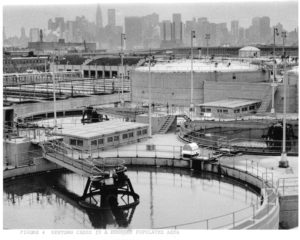
Clean Water Timeline Documents NEIWPCC and Industry Milestones
Meander through time with a new digital timeline to honor NEIWPCC’s 75th anniversary and 50 years of the federal Clean Water Act. Beginning in 1899 with the Rivers and Harbors Act, the timeline catalogs key water-related events, legislation, and milestones at the national and regional level that helped to shape the industry, as well as…
-
Seeking Presenters for TMDL Webinar Series
Training Webinars for Water Quality Impairment Professionals. NEIWPCC is now accepting presentation proposals for the National 303(d)/TMDL Webinar Series. Since 2016, this EPA-funded program has offered training and technical assistance to advance Clean Water Act Section 303(d) implementation. The webinars focus on key topics for state, territory, and tribal 303(d) and TMDL programs and other partners…
-
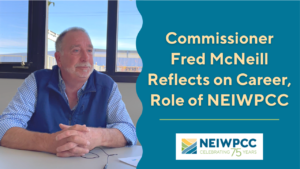
Celebrating Clean Water: Reflections on 40 Years in the Water Industry
Growing up along the Merrimack River in Bedford, New Hampshire, NEIWPCC Commissioner Fred McNeill recalls catching large bass with abnormal orange eyes – a result of years of water pollution. In this new video, McNeill shares his 40-year water industry career journey that brought him back to the banks of the Merrimack River, where he…
-
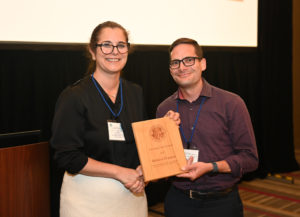
Clean Water Association Honors NEIWPCC Director’s Leadership
The Association of Clean Water Administrators (ACWA) honored Richard Friesner, NEIWPCC’s director of Water Quality Programs, with an Emerging Leaders Award at its recent annual meeting held in Memphis, Tennessee. The award recognized Friesner’s “notable leadership on or contributions to the work of an ACWA committee, task force, and/or workgroup, and show demonstrated potential for…
-
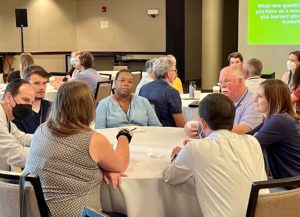
NEIWPCC hosts National State Revolving Fund Workshop for First Time
NEIWPCC, in collaboration with member states and the U.S. EPA, held the National State Revolving Fund (SRF) Workshop in Portsmouth, New Hampshire in July. The workshop covered programmatic, financial, and technical aspects of SRFs. Session topics included environmental justice, PFAS, climate resilience and energy efficiency, nonpoint source management, and the 2022 Clean Watersheds Needs Survey.…
-
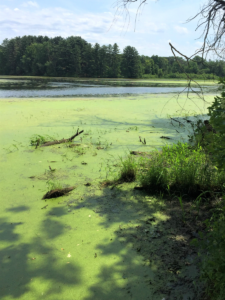
Two Webinar Series Provide 303(d) Professional Training
NEIWPCC will continue the National 303(d)/TMDL Webinar Series under the rebranded name of “Restoring Our Impaired Waters National 303(d) Webinar Series.” The EPA-funded webinar series launched in 2016 to provide training and technical assistance to 303(d) program personnel from states, tribes, territories, and the EPA. The series aims to build stakeholder capacity to respond to…
-
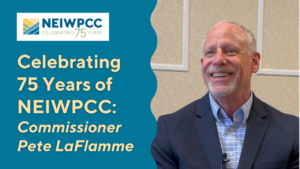
Achieving Water Quality Standards Through Collaboration and Problem-Solving
NEIWPCC Commissioner Pete LaFlamme Shares His Perspectives From protecting Lake Champlain to managing biosolids: In this new video, commissioner Pete LaFlamme praises NEIWPCC staff for their collaborative efforts across the Northeast region to improve water quality. LaFlamme, director of the Watershed Management Division at the Vermont Department of Environmental Conservation, speaks of the many invaluable…