
-
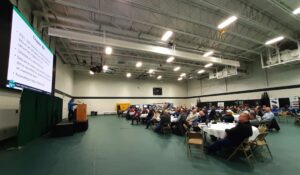
Call for Abstracts Now Open: North Country Convention
NEIWPCC and Maine’s Joint Environmental Training Coordinating Committee (JETCC) are now inviting abstracts for the North Country Convention, to be held April 2-3, 2025, in Presque Isle, Maine. The two-day educational event and trade show is designed for wastewater and drinking water operators in northern Maine. Abstract submissions are due on November 15. Submissions are…
-
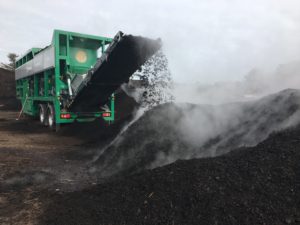
Information Clearinghouse for PFAS Sludge and Biosolids Resources Now Available
Per- and polyfluoroalkyl substances (PFAS), a group of emerging contaminants, are making headlines as they accumulate at wastewater treatment facilities – the result of their widespread use in consumer and industrial products. PFAS are persistent and mobile once released into the environment and can harm human health. Novel technologies are being developed to treat PFAS…
-
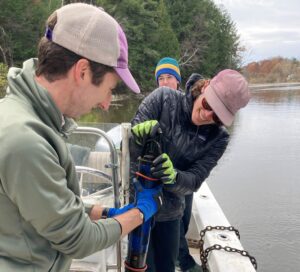
Quality Assurance Project Plans Ensure Accurate and Usable Data
By Emily Bialowas and Cheyenne Ellis Every year, NEIWPCC funds numerous projects across its partner programs, including the Long Island Sound Partnership, the Hudson River Estuary Program (HREP), and the Lake Champlain Basin Program (LCBP). The U.S. Environmental Protection Agency (EPA) is the source of a significant portion of this funding, which therefore requires NEIWPCC…
-
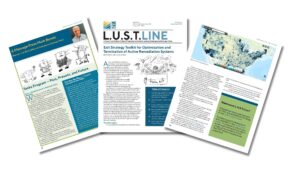
L.U.S.T.Line Highlights Evolving Underground Storage Tank Industry
The most recent issue of LUSTLine (#94) — a publication to promote the exchange of information in the underground storage tank (UST) community — focuses on new developments that make the industry more efficient and inclusive. The latest version is available on the website as individual articles or in PDF form. Matthew Lahvis, principal scientist…
-
Long Island Sound Study Seeks Input on Draft Conservation Plan
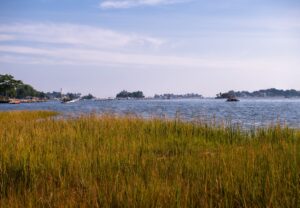
The Long Island Sound Study (LISS), a NEIWPCC program partner, has opened a 60-day public comment period for formal review of the full draft 2025 Comprehensive Conservation and Management Plan (CCMP). LISS develops and implements a management plan that establishes priorities for conservation, research and funding for the estuary and its watershed. The CCMP serves…
-
Five-Year Project Delves Into Success Stories Behind National Clean Water Strategies
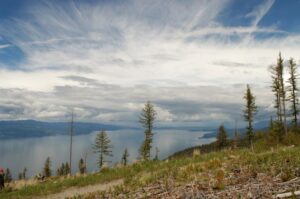
From the rugged mountains of northwestern Montana to the largest estuary in the country – the Chesapeake Bay, NEIWPCC’s Clean Water Success Story Project aims to uncover a diverse array of Clean Water Act Section 303(d) achievements. The project is intended to inspire other water quality programs, inform stakeholders and the public, and generate support…
-
Fall Issue of Interstate Waters now Available
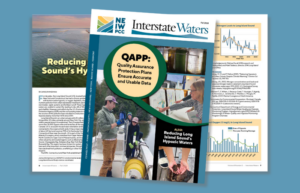
The Fall 2024 issue of NEIWPCC’s biannual magazine, “Interstate Waters,” is now available both online and in print. The cover story focuses on NEIWPCC’s Quality Assurance Project Plans – mandated by the EPA – which are required for any study the commission funds that collects or uses data for the purpose of environmental decision-making. Another…
-
Lake Champlain Basin Program Offers $5.5 Million in Grants for Clean Water and Healthy Ecosystem Projects
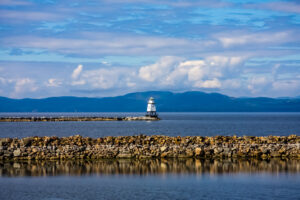
The Patrick Leahy Lake Champlain Basin Program, a NEIWPCC program partner, seeks proposals for projects that improve water quality and ecosystems in the Lake Champlain watershed. The Program anticipates awarding approximately $5,500,000 to local organizations, municipalities, and educational institutions. Proposals may be submitted to address the following categories: Eligible organizations include colleges, universities, nonprofit organizations,…
-
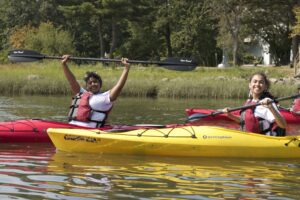
Massachusetts Students Spend Summer Working at Wastewater Treatment Plants
This summer, seven high school students completed paid internships at wastewater treatment plants in Lowell and Lawrence, Massachusetts through the Youth and the Environment Program (YEP). Created by the U.S. Environmental Protection Agency (EPA) in 1990, YEP allows youth to gain hands-on experience in the environmental field through a six-week schedule that includes working alongside…
-
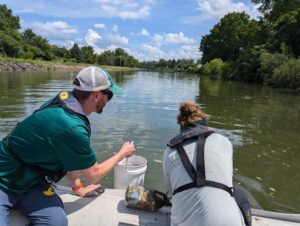
Multiplate Sampling on the Genesee River in New York State
This summer, NEIWPCC staff joined the New York State Department of Environmental Conservation (NYSDEC) to perform multiplate sampling for macroinvertebrates on the Genesee River near Rochester, New York. Multiplate samplers are designed to attract macroinvertebrates and other aquatic organisms. This sampler is made out of three 6-inch square tempered hardboard plates, separated by spacers, and…