
-
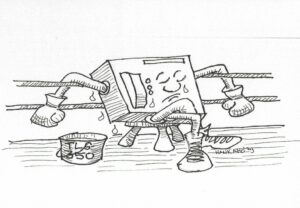
LUSTLine Examines the Past, Present and Future of the Tanks Industry
The latest issue of LUSTLine (#93) looks back at the history of the underground storage tanks industry, while also highlighting some of the newest developments in the field. Marcel Moreau, a nationally recognized petroleum storage specialist, investigates the impact that the Veeder Root TLS 350 has had in preventing fuel tanks from leaking through quick detection…
-
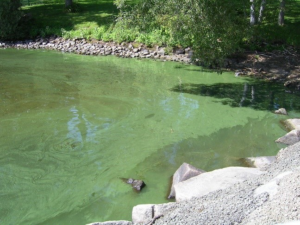
The Role of Nutrients in Water: Launching Season Two of the Clean Water Pod
Season two of the “Clean Water Pod” podcast will focus on nutrient-related success stories from across the country. To set the stage for this topic, host Jeff Berckes kicks off the first episode by speaking with two professors about the role of the commonly found nutrients, nitrogen and phosphorus, in water quality. To learn about…
-
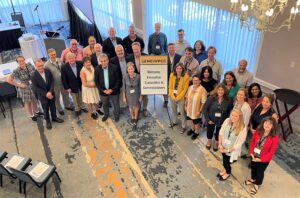
New Officers Elected at Fall Commissioners Meeting
NEIWPCC hosted its annual fall Executive Committee and Commission meeting in Plymouth, Massachusetts in September. Attendees included representatives and commissioners from NEIWPCC’s seven member states, the U.S. EPA Regions 1 and 2, and invited guests from the National Association of Clean Water Agencies (NACWA), U.S. Geological Survey (USGS), and the New York and New England Environmental Finance…
-
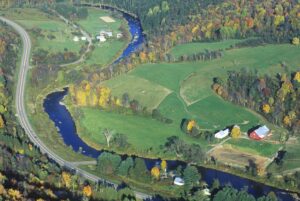
Interstate Waters Explores Tile Drains and Environmental Art
The Fall 2023 issue of Interstate Waters features Matthew C. H. Vaughan, chief scientist at the Lake Champlain Basin Program, examining the challenges presented by the use of agricultural “tile drains.” These hidden pipes run under the surface of farm fields to move water away from the crop root zone. However, their use creates challenges…
-
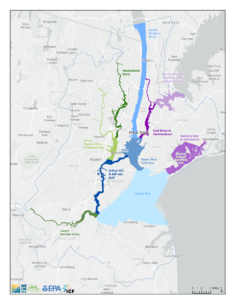
Economic Study in the New York-New Jersey Harbor Estuary Reveals Improved Water Quality Creates Significant Economic Value
The New York-New Jersey Harbor & Estuary Program (HEP) and NEIWPCC released the first-ever attempt to calculate the economic value of clean water in the New York-New Jersey Harbor Estuary. The report, which was completed by management consulting company ICF and NEIWPCC, and funded by the U.S. Environmental Protection Agency (EPA), suggests that even relatively…
-
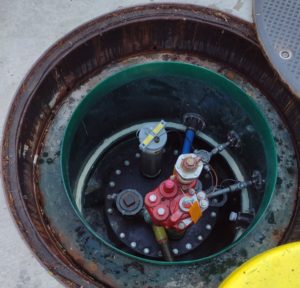
Upcoming Underground Storage Tank Training Webinar
State-Run Underground Storage Tank (UST) Service Provider Certification Programs: Implementation and Challenges The next underground storage tank training webinar will explore state-run certification programs for UST service providers. The event is scheduled for September 26, 1 p.m. EDT via Zoom. The webinar will provide an overview of service provider certification programs from four states: New…
-

Lake Champlain Basin Program Seeks Reviewer for Clean Water Accounting Methods
The Lake Champlain Basin Program (LCBP), in coordination with NEIWPCC, has issued a Request for Proposals (RFP), seeking an external reviewer to inspect the clean water accounting methods used by the Vermont Department of Environmental Conservation and New York State Department of Environmental Conservation. The reviewer will examine and compare methods used by both organizations…
-
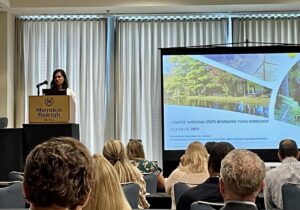
National State Revolving Fund Workshop Explores Water Quality Initiatives and Strategies
NEIWPCC, in collaboration with the U.S. EPA, states, and other partners, hosted the 2023 National State Revolving Fund (SRF) Workshop in Raleigh, North Carolina in July. The workshop provided attendees with opportunities to learn about SRF program implementation through panel discussions and case studies from across the country. Session topics included watershed partnerships, green infrastructure,…
-

Source Water Protection Toolkit Now Available Online
NEIWPCC has issued an updated source water protection toolkit, which is now available for use by municipal and regulatory officials throughout the seven member states. The document provides information and resources to stakeholders on how they can better protect drinking water sources in their communities. An accompanying outreach guide is also available on our website.…