• 2020 State of the Hudson Report Now Available

    New York State Department of Environmental Conservation (DEC) and the New York – New Jersey Harbor & Estuary Program have released the “2020 State of the Hudson.” The report documents the status and trends of the Hudson River Estuary’s water quality, its natural communities and inhabitants, and the health of the landscape that nurtures the…

    Read more


  • Water Quality Standards across the Northeast

    Updated Resource Compiles, Compares Water Regulations in the Region NEIWPCC recently completed a major update to our water quality standards matrix, designed to make it easy to compare how the states in the Northeast regulate different water quality parameters. The matrix includes criteria for thirty water quality parameters— that is, pollutants or characteristics—that some or…

    Read more


  • From Mangroves to Wastewater: Stringer’s Water Journey

    Dr. Christina Stringer, NEIWPCC’s new director of Wastewater and Onsite Systems, brings a wealth of experiences and perspective to her new role. Diving deep into water after earning a bachelor’s in chemistry, Dr. Stringer pursued a master’s in chemical oceanography, followed by a doctorate in geology, with a focus on ecohydrology (the interactions between water…

    Read more


  • New Handbook Guides Hudson River Landowners

    A new publication, “Creating and Maintaining Hudson River Views: A Handbook for Landowners,” is now available on the New York State Department of Environmental Conservation website. The handbook provides guidance for historic sites, land trusts, and owners of other large properties to use the best methods for environmental stewardship, creating and maintaining scenic vistas that…

    Read more


  • New Culvert Constructed Under Plan Developed by NEIWPCC and Trout Unlimited

    Following a management plan developed by Trout Unlimited and funded by the Hudson River Estuary Program in partnership with NEIWPCC, the town of Copake, NY recently completed the construction a new road culvert, replacing one that was severely in need of repair. The old culvert had posed a significant threat to the community’s infrastructure and…

    Read more


  • Our Work During the Pandemic

    Our Work During the Pandemic

    NEIWPCC adapts amid coronavirus crisis The first thing to go was our annual “all-staff” meeting that had been planned for the end of March. By mid-month, it seemed clear that interstate travel was not in the cards. Just a few days later, as state governors issued work-from-home orders, we postponed what would have been our…

    Read more


  • Northeast Water Quality Standards Training

    In October 2019, NEIWPCC hosted a regional water quality standards training for our member states. The training, held at the request of NEIWPCC’s water quality standards work group, covered important national and regional water quality issues. In this Northeast-specific training, state water quality personnel learned from each other and from regional experts and shared their agencies’…

    Read more


  • Biotic Index Promises Monitoring Insights

    The Bugs Tell the Tale A scientist wades into a slow-moving stream and brushes one square meter of the stream-bottom surface into a net. The procedure collects large invertebrates—mostly insects—for study. These bottom-dwelling animals are good indicators of stream health over time. There are many species, and some tolerate pollution better than others. Other field…

    Read more


  • Youth Program Expands to Lawrence, Mass.

    Eight Lawrence and Lowell high-schoolers are getting closely acquainted with wastewater treatment this summer. In Lowell, four teens are shadowing operators, lab technicians, and other employees at the Lowell Regional Wastewater Utility. They also complete maintenance tasks like weeding or hosing down settling tanks. In Lawrence the students split their time between the Greater Lawrence…

    Read more


  • Eel Project Documents Volunteer Data

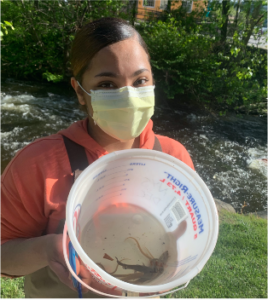
    Every spring since 2008, volunteers have waded into the Hudson River and its tributaries to count migrating juvenile American eels. This year, that activity and the data it collects are backed by a formal quality assurance project plan (QAPP). Such project plans allow researchers and decision-makers to know how data were collected. The organizers of…

    Read more