
-
2023 Annual Report Now Available
NEIWPCC’s 2023 annual report is now available, both online and in print. The report features accomplishments from throughout the fiscal year and is organized around NEIWPCC’s core values: leadership, collaboration, education, service and science. Highlights from the leadership section include the formation of a new BioHub group, which met several times throughout the year. The…
-
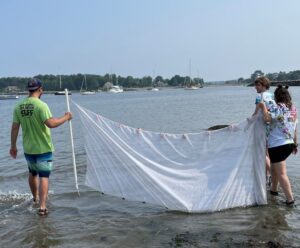
From Sewage to Seining: Youth Explore Environmental Careers
By Cheyenne Ellis A group of high school students trudge down the coastal forest path, swatting bugs away from their faces and grumbling as they make their way toward the beach. All at once, the woody debris beneath their feet turns to sand and the forest gives way to views of the Atlantic Ocean. The…
-
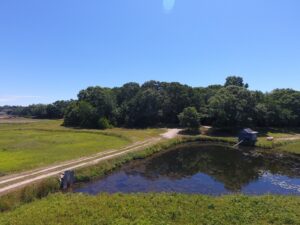
Clean Water Podcast Features Nature-Based Solutions on Cape Cod
Water quality issues on Cape Cod, Massachusetts stem from an increasing population as well as an influx of summer tourists that nearly triple the local population. Excess nitrogen enters area waterbodies primarily through septic systems as well as stormwater and nitrogen-rich fertilizers. In this episode of the “Clean Water Pod” podcast, listeners will hear about…
-
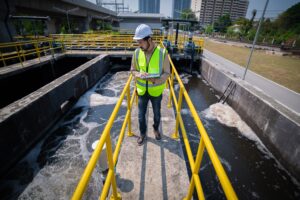
“Management May” Wastewater Training Series Now Offered
This May, NEIWPCC will launch a new a-la-carte management training series for clean water professionals. The four courses are designed to help operators build the skills needed to grow in their positions, both complimenting and offering an alternative to more comprehensive year-long management programs offered in many states. The virtual classes will be taught by…
-
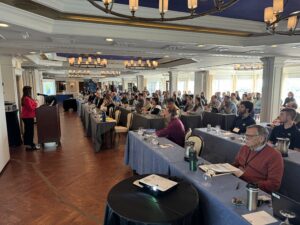
Annual Nonpoint Source Conference Focuses on Climate, Outreach and Implementation
The 34th Annual Nonpoint Source (NPS) Conference was held in coastal Old Saybrook, Connecticut in early April. This year’s theme, “Climate Resiliency through NPS Outreach and Implementation,” underscored the vital role of nonpoint source pollution management in building sustainable communities. The two-day conference attracted more than 120 attendees from diverse sectors, including federal and state…
-
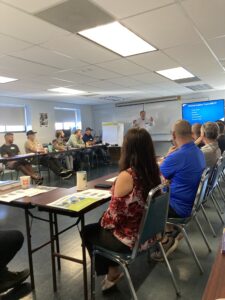
Upcoming Course Will Teach Outreach Skills to Wastewater Professionals
NEIWPCC will offer a live-virtual course worth three training contact hours entitled “Increasing Public Support for Wastewater with Proven Positive Outreach” on Thursday, April 11 at 12:15 – 3:15 p.m. William (Bill) Patenaude, a NEIWPCC trainer for the Wastewater and Onsite Programs Division, is running the course to help operators gain community support by educating…
-
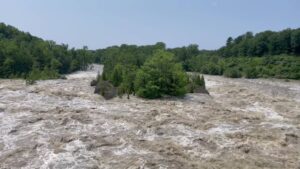
Maine, Vermont Floods Underscore Climate Change Impacts
As powerful floods swept through Vermont and Maine in 2023 and early 2024, they left communities struggling to cope and highlighted the increasing risks posed by climate change. Record rainfall caused rivers to surge, inundating towns, damaging infrastructure, crippling transportation networks, and forcing evacuations. In Maine, the Kennebec River in Augusta reached 25 feet, eight…
-
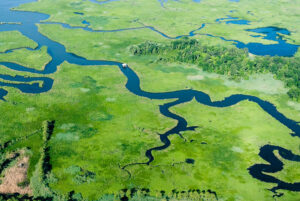
Clean Water Podcast Explores Partnership Approach in Maryland’s Choptank River
In the Choptank River watershed, located in Delaware and Maryland, a multi-stakeholder collaborative works to improve water quality by developing locally driven projects that benefit the community and the environment. In this episode of the “Clean Water Pod” podcast, listeners will learn about the unique approach and successes of the Envision the Choptank partnership. Host…
-
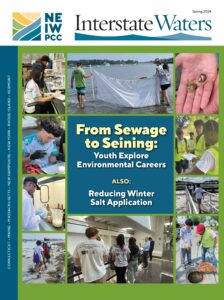
Spring Issue of Interstate Waters now Available
One of NEIWPCC’s key critical objectives centers on workforce development, with the goal of delivering programs and services that attract and retain a diverse, talented group of water quality professionals, both internally and within the broader water resource field. In the spring issue of Interstate Waters, NEIWPCC Information Officer Cheyenne Ellis provides an overview of…
-
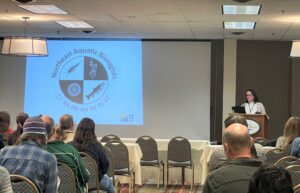
Collaboration and Research at the 2024 Northeast Aquatic Biologists Conference
More than 175 aquatic and environmental biologists attended the annual Northeast Aquatic Biologists (NAB) Conference in Fairlee, Vermont. The event drew participants from state, federal, tribal, and municipal governments; the private sector; academia; and watershed organizations from New England and New York to network, collaborate, and share research. Opening remarks were provided NEIWPCC’s Maryann Dugan and Richard Friesner, followed…