
A Message From NEIWPCC’s UST/LUST Program Coordinator: James Plummer
Tanks Nerds Wanted
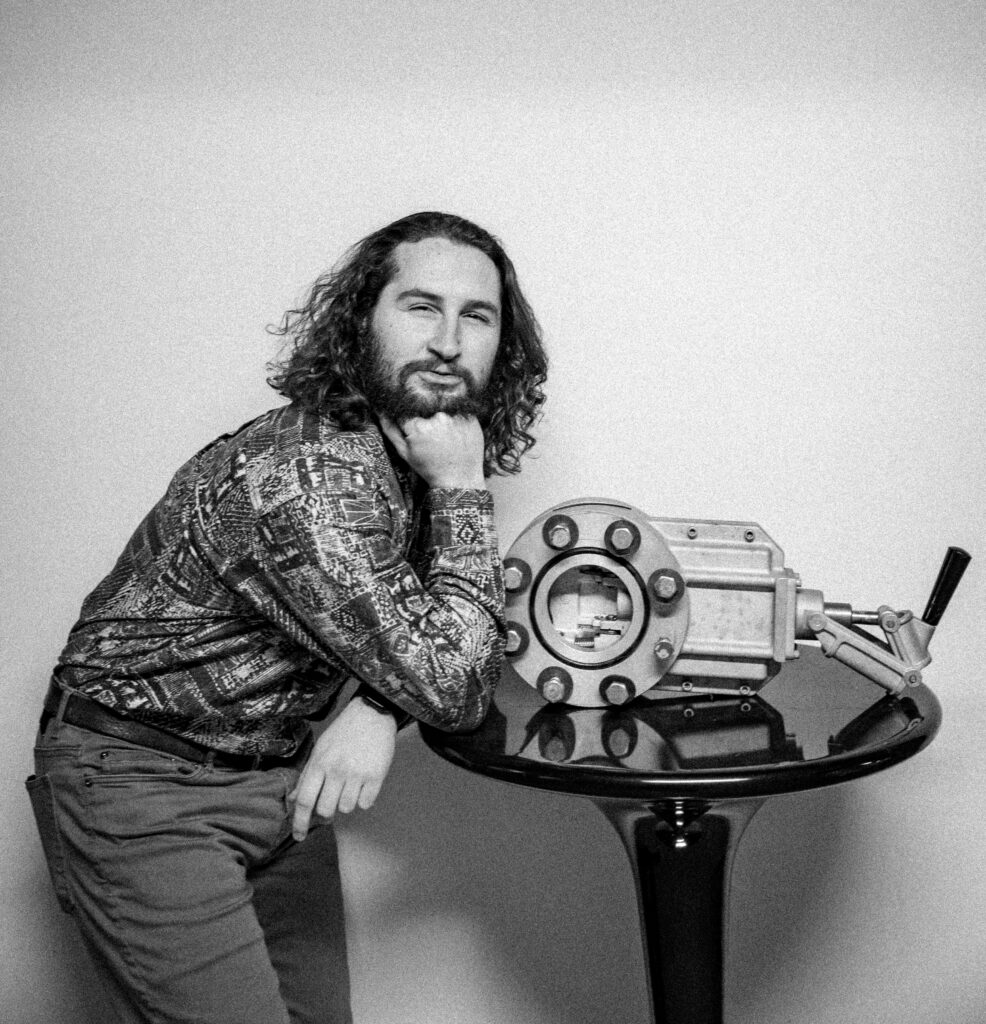
Even though I’m a social butterfly, I still find it challenging to join a new community. However, when I started in this role two years ago, I felt immediately welcomed and embraced by the tanks community. It’s certainly due in part to my position mandating my involvement with folks in organizations all over and at varying levels, but it’s also the outcome of this community’s nerdiness about its underappreciated niche. There’s a substantial sense of ownership and pride that folks in this space exude, and they are eager to share their insights, experiences, and networks.
I am fortunate to be in a role that provides abundant opportunities to connect with well-seasoned folks on a regular basis, but I know that not everyone is afforded that luxury. For new professionals, there’s a maze of guidance, training materials, and past webinars, let alone the sea of connections yet to be made that could inspire solutions or simply assist with the absorption of tanks vernacular.
In this issue of LUSTLine, we ventured to help make the landscape a little less daunting by (re)introducing some of the organizations that exist in this space. There’s so much great work happening and our job is to make sure you know about it.
In that vein, if you aren’t familiar with NEIWPCC, I’m here to help. In 1947 (don’t worry, I’m not going to talk through the whole organizational history), an act of the U.S. Congress created the New England Interstate Water Pollution Control Commission to support regional coordination on environmental issues. In the 1970s and 1980s, as USTs were gaining public attention and states were responding at different paces, NEIWPCC facilitated connections among states and coordinated with the U.S. Environmental Protection Agency (EPA) to move the needle on compliance and cleanups. Since then, we’ve continued to coordinate with EPA, states, and Tribes to support improved leak and spill prevention and more efficient remediation of contamination.
Not to toot our horn too much, but NEIWPCC’s early involvement in the UST regulatory landscape is exemplified by this excerpt from the first issue of LUSTLine published in August 1985: “Much of the credit for the advanced state of UST regulatory program development must also go to the New England Interstate Water Pollution Control Commission (NEIWPCC). This consortium of six New England states and New York has provided a forum for several decades for Northeast states to share information on stream standard classification and achievement of clean water goals. They later turned their attention to groundwater issues and began in January 1984 to hold regular meetings to formalize and foster compatible state UST regulatory programs. Through this interstate communication, the first tank pioneers were able to lead the way for others to follow.
For example, New Hampshire was able to craft its draft underground tank regulation within one year by picking key components from New York’s, Connecticut’s and Rhode Island’s packages. These state programs had already been through 2-3 years of assessing and defining the UST problem. Finally, NEIWPCC made a regional effort to increase public awareness of UST issues through production of a brochure and a slide-tape show.”
We should reinstate the use of slide-tape shows as a public outreach tool. That’ll get people’s attention. I’m assuming you need one of those Kodak carousel things? I’ve never seen one. I was born between CD’s overtaking cassettes and mass MP3 piracy. If you’ve somehow managed to hold onto a copy, let us know.
As I’m looking through the first issue, I’d encourage you to scan through the LUSTLine Archive. In the past 96 issues, there are probably upwards of 500 articles that contain a plethora of insights and snapshots of tanks history. You can also navigate archived articles sorted by topic in the LUSTLine Index if you’re looking for information on something specific. If you don’t find what you’re looking for, let us know and we can dig into it in a future article.
I found some other interesting tidbits in the first issue, so I thought I’d share a couple:
- In 1984, Maine completed a Survey of Existing Underground Oil Storage Tanks which demonstrated, according to long-time LUSTLine author and contributor Marcel Moreau, “that they really didn’t know anything,” and that, “when you know there are a lot of tanks out there you know nothing about, you can really justify the need for notification requirements and for registration requirements.”
- Some things don’t seem to change: “States that have already implemented notification programs and those now developing programs realize that increased public awareness and participation in UST regulation depends on an effective communications strategy. States have identified a number of useful communication tools such as workshops, press releases, direct mail, and public forums. The most effective tool, however, seems to be the use of trade associations in communicating the UST requirements to the tank owners.”
- Take a look if you work in California, Connecticut, Florida, Maine, Massachusetts, Michigan, New Hampshire, New Mexico, New York, Pennsylvania, Rhode Island, or Vermont. The issue really provides a snapshot of the landscape at the time including the state of states’ notification and registration requirements, communications strategies, and regulation development. If you have a historical document from your organization or agency that shows what was going on in 1985, send it our way. We’d love to spotlight it in a future article.
The first issue also mentions the possibility for a “national 2- or 3-day conference on UST regulation.” NEIWPCC has co-sponsored the National Tanks Conference (NTC) since 2005, and many of the presentations have been recorded and can be viewed in the NTC Archive as well as on NEIWPCC’s YouTube channel. Speaking from my experience at the NTC in Spokane, Washington in 2025 (and ignoring my bias as the lead event organizer), NTC is the best opportunity to learn about the shifting tanks landscape and connect with folks across boundaries, both geographic and technical. Bridging the gap between funding, compliance, and cleanup by bringing together regulators from Tribes, states, territories, and federal agencies, alongside consultants, equipment manufacturers, and other industry experts, creates a learning environment focused on connections and curiosity. Peer organizations also host great events! You’ll find me at the PEI Convention at the NACS Show and ASTSWMO’s Annual Meeting. Shoot me a note if you’ll be attending and want to chat!
Other Ways NEIWPCC Supports the Tanks Community
We’re a couple of years away from the next National Tanks Conference, but there are other ways we’re helping folks connect in the meantime. NEIWPCC recently launched the Online Tanks Community, a safe space exclusively for regulators to ask questions, share resources, and network with peers at the federal, Tribal, and state levels. If you haven’t already done so, you can create an account on the website. Once you’re in, you can create your profile, post questions, see who else is in the community, and join an upcoming community call.
For several years, NEIWPCC has been supporting the National Work Group of Leak Detection Evaluations (NWGLDE) which comprises of experienced state and federal staff. NWGLDE maintains their listing pages which display storage tank and associated piping leak detection equipment and methods that have undergone independent third-party evaluations and have been found by NWGLDE to meet the evaluation requirements contained in accepted protocols. NWGLDE meets twice a year to review listings and evaluate new equipment and methods. If you’re a state employee interested in seeing what they’re all about, feel free to reach out to any of the members to learn more and get involved. If you’d like to have your equipment included on NWGLDE’s list, you can download this file for information on the requirements and procedures for submitting the proper documentation.
Every other month, NEIWPCC hosts Tribal Tank Talk Tuesdays, an opportunity for staff working with USTs in Indian Country to meet virtually to ask questions, share resources, and connect about priorities. These meetings frequently inspire the organization of in-person trainings and the development of online content.
Last year we released our free, self-paced online Class A and Class B UST Operator Training and Exam. It was developed in partnership with EPA’s Office of Underground Storage Tanks and although it was designed to support operators in Indian Country, it is available and helpful for all operators. While passing the exam demonstrates required knowledge for the federal requirements, states and other implementing agencies may have different requirements.
In addition to creating opportunities for networking and information exchange, over the past 10 years or so we’ve had the honor of hosting exceptional experts to showcase their work via webinar. Mixed in among National Tanks Conference session recordings are dozens of webinars available for your viewing. UST and LUST videos have been categorized into searchable tables on NEIWPCC’s website.
We’ve also been developing two new self-paced courses, which will be available soon. One is geared towards UST inspectors and provides insights and perspectives from experts across the country while the other walks you through an introduction to federal LUST regulations. Keep an eye out.
While this spiel points to a lot of different resources that we have accessible, it’s certainly not the threshold of what’s out there. Getting involved and asking questions is the best way to stay informed and find solutions. There are a lot of nuances in the world of USTs, and we aren’t alone in trying to navigate it. Digging deeper into the weeds, you too may find yourself in a web of nerdiness surrounded by a cacophony of enthusiastic tanks professionals at the next National Tanks Conference.
The more time I spend in this space, the more I see that the folks involved just want to share their wealth of wisdom and experience. It’s a luxury to be immersed in such commitment and energy. I welcome you to get involved in any way you can and reach out if there’s any help that we can provide. I’ll look forward to hopefully seeing you soon!
Author

Issue: #97 | View Archives
Connect With Us

Sign up for our monthly
e-newsletter

