
Resources for New Professionals
The following pieces provide an introduction to some of the most prominent organizations and programs in the underground storage tank industry for those who are new to the field.
(Click an organization below to jump to that section)
- Association of State and Territorial Solid Waste Management Officials
- Interstate Technology and Regulatory Council
- Oneida Nation Underground Storage Tank Bootcamp
- Petroleum Equipment Institute
- Institute for Tribal Environmental Professionals
Get to Know ASTSWMO
By Anna Gayle Griffiths
The Association of State and Territorial Solid Waste Management Officials, Inc. (ASTSWMO) is an organization representing the 50 states, five territories, and the District of Columbia (“states” herein). Our primary functions are to enhance the state and federal partnerships, promote effective state programs, and provide member states with technical assistance, training, and forums for information exchange. ASTSWMO has five subcommittees that represent different federal statutes: CERCLA/Brownfields, Hazardous Waste, Materials Management, Federal Facilities, and Tanks.
The Tanks Subcommittee has three task forces dedicated to compliance and inspections, UST releases and remediation, and state trust funds/financial assurance. For each task force, the 10 EPA regions have a dedicated representative that serves a three-year term. These regional representatives meet monthly to discuss issues relevant to their state programs, task force project work, and EPA/industry updates. Existing publications produced by the task forces can be found here. Below are links to recently completed projects and current topics of focus for each of the task forces.
Release Prevention
- UST 101 webinar.
- Common compliance violations.
- Source and cause of UST releases.
- Start-up testing/installation inspections 101.
Leaking Underground Storage Tanks
- 2026 LUST Trust Fund Fact Sheet.
- LUST 101 Part 1 and Part 2 webinar.
- High resolution site characterization.
Financial Responsibility
- FR 101 webinar.
- Abandoned tanks.
- Deductibles and incentives.
- Rate establishment.
ASTSWMO developed a space for resources, guides, and regulations to be compiled and shared. Check out existing content and contribute resources to the Tanks Resource Compendium.
ASTSWMO hosts two conferences annually. The 2026 Mid-Year Meeting was held May 20-21 in Moran, Wyoming. The 2026 Annual Meeting will be held October 29-30 in Arlington, Virginia.
The Tanks Subcommittee is currently seeking a Region 7 representative for the Financial Responsibility Task Force. If you are interested in becoming an active member of the ASTSWMO Tanks Subcommittee, please fill out our interest form.
Anna Gayle Griffiths is a tanks program manager at ASTSWMO. She can be reached at annag@astswmo.org.
Environmental Solutions in Practice: ITRC’s Training and Technical Resources
By Taylor Voelkel
The Interstate Technology and Regulatory Council (ITRC) is a national coalition of environmental regulators, practitioners, and stakeholders who share a common goal of advancing practical solutions to today’s environmental challenges. ITRC operates as a program of the Environmental Research Institute of the States (ERIS), a 501(c)(3) education and research nonprofit affiliated with the Environmental Council of States.
ITRC works to reduce interstate barriers that can slow the adoption of innovative environmental technologies. We do this by developing technical and regulatory guidance documents, focus and fact sheets, technology information sheets, and other products, each accompanied by training and educational resources designed to help environmental professionals apply science in real world settings. Our work spans a wide range of environmental challenges, from site management, remediation, and optimization tools and strategies to providing the latest science on individual contaminants.
ITRC’s strength comes from its people, with more than 1,000 members who actively serve on project teams, develop training materials, and drive the organization’s work forward. We are committed to developing evidence-based solutions rooted in consensus.
Since 1995, ITRC has produced more than 150 written products, many of which provide solutions to common challenges experienced by environmental professionals working on LUST sites. For example, in January 2026, we released the Vapor Intrusion Toolkit, which includes a new Vapor Intrusion Technical and Regulatory Guidance and dozens of fact sheets, technology information sheets, and checklists on a range of topics including petroleum vapor intrusion.
One key priority for ITRC is educating the environmental community, which is done largely through our series of live and archived web-based training courses. ITRC has a longstanding partnership with U.S. EPA’s Clean Up Information Network (CLU-IN) to deliver free training led by ITRC volunteers who are experts in the environmental community. These sessions translate ITRC’s written products into clear and accessible learning opportunities that support both new and experienced practitioners.
Our 2026 training series includes dozens of live training sessions on several topics including Introduction to Hydrocarbons, Vapor Intrusion Introductory Concepts (two parts), Pump and Treat Optimization, and contaminants of emerging concern. Learn more about and register for our upcoming training opportunities on our online training webpage. The webpage also includes links to our archived training materials and YouTube channel.
This year, ITRC also launched the Petroleum Training Curriculum Workgroup in response to increased turnover in the environmental field and a growing generational gap in the workforce. The workgroup is developing a comprehensive petroleum training curriculum that serves as a one-stop resource for new environmental professionals. Learn more about this workgroup and ITRC’s other active project teams on our website.
ITRC remains committed to supporting environmental professionals through high-quality technical resources and training. All are encouraged to explore ITRC’s guidance documents, participate in training opportunities, and actively collaborate on our project teams through ITRC membership.
“ITRC provides many training opportunities that help new state hires, including the Hydrocarbons 101 training currently available on CLU-IN. Additionally, our current ITRC Petroleum Training Curriculum Workgroup will be releasing new resources to assist new hires in many states get quickly up to speed on basic and technical details of hydrocarbon properties.”
– Richard Spiese, Vermont DEC / Former ITRC Board Member
Taylor Voelkel is a project manager for the Interstate Technology and Regulatory Council. She can be reached at tvoelkel@ecos.org.
Oneida Nation Runs UST Bootcamp for Tribal Professionals
By Victoria Flowers
Since 2004, the Oneida Nation (“the Nation” herein) has provided compliance assistance (CA) to owners and operators of federally regulated underground storage tanks on the Oneida Reservation through the U.S. Environmental Protection Agency’s (EPA) Direct Implementation Tribal Cooperative Agreement.
This training consisted of on-site training at the facility and classroom experience that included service providers from the petroleum equipment industry, hydrogeologists from the Wisconsin Department of Natural Resources, and risk managers who discussed the impacts of petroleum releases on the environment and financial liability. This empowered the associates and management to react quickly to alarms and potential releases, and to contribute to the protection of the Nation’s natural and built resources and economic success.
Starting in 2007, the success of the Nation’s training program was shared at the National Tanks Conference, the National Brownfield Conference, the Petroleum Equipment Institute’s (PEI) convention at the National Association of Convenience Store Conference, the EPA Region 5 Tribal Environmental Program Managers Conference, and Wisconsin’s Petroleum Marketer and Convenience Store Association’s – Tribe’s Only meeting.
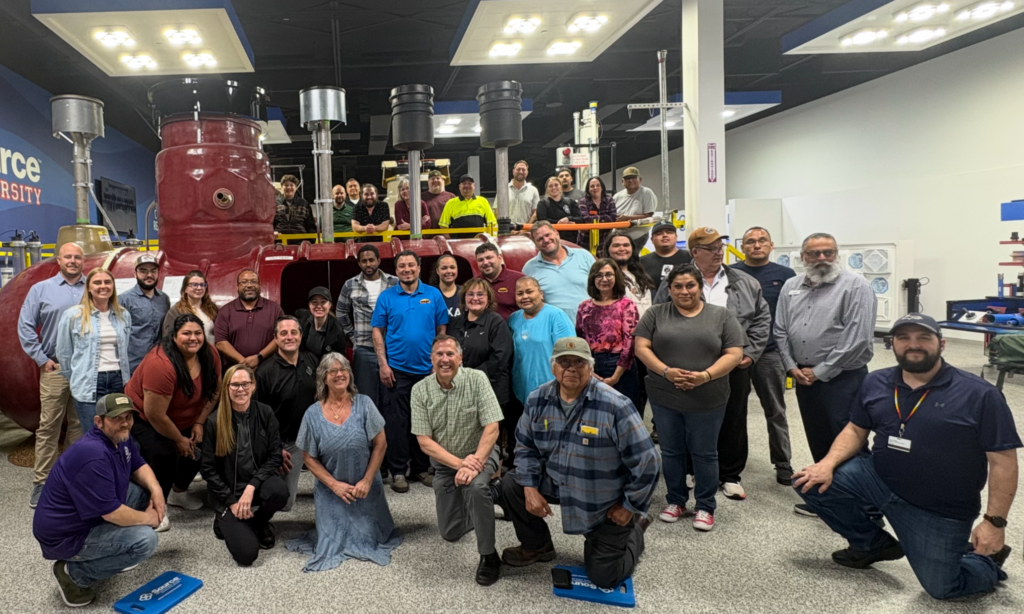
Soon after the presentations began, the CA team started receiving requests from Tribes across the country about participating in this training. As a result, the CA assembled a team that consisted of service providers, equipment manufacturers, representatives from the insurance industry, regulators, and other Tribal professionals to deliver presentations. The CA procured a 3D cutaway model of an UST by fabricating and acquiring many pieces of equipment that make up a fuel dispensing system to create a more immersive and tactile experience. Tribes from across the country began attending these sessions and soon after, the first UST Boot Camp was launched. We soon received numerous requests to host these trainings at other Tribal facilities. The CA program retrofitted a trailer to haul the equipment to various locations, which allowed for a pop-up experience outside of gas stations to inform community members about their local facilities.
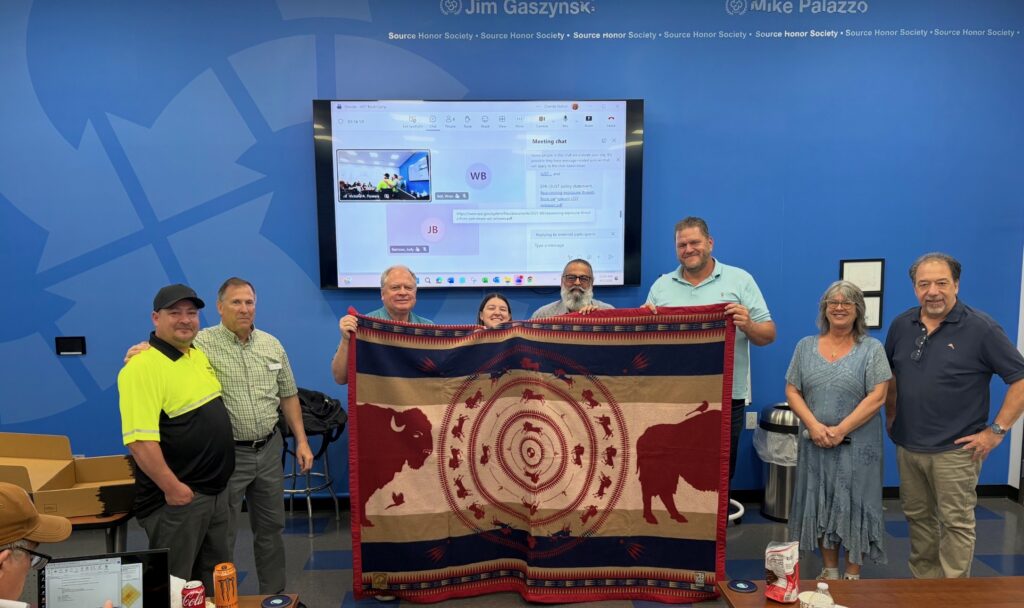
In 2018, the Boot Camp began offering classes at Source University in Arlington, Texas, with participant support funding available from NEIWPCC. Source University offers a unique experience for students, with two complete UST systems set up in a warehouse that are cutaway to expose otherwise hidden parts. Equipment manufacturers, service providers, EPA, and construction professionals are frequently invited to give presentations about their role in ensuring the safe and proper operation of an UST system with a strict “tell don’t sell” policy enforced. This is coupled with a visit to the Choctaw Nation’s truck stop in Durant, Oklahoma, to do a monthly walkthrough, tank top inspection, and spill response training.
The benefit of this training is twofold. Firstly, the interaction between Tribal professionals who specialize in fields including environmental compliance, retail operations, and economic development allows Tribes to learn from each other and share their lived experiences. Secondly, these interactions have raised awareness in the service industry about the needs that exist in Indian Country and improve service providers’ understanding that by servicing facilities in these communities they are having a larger impact on the community than just enabling folks to pump gas. To date, the Oneida Nation UST Boot Camp has trained more than 700 individuals, representing more than 160 Tribal Nations. Classes fill almost immediately, with many inquiring about future opportunities.
“I attended the most recent UST Boot Camp a few months ago and was blown away by the quality and breadth of the training. Attendees were zoned in, asking great questions and sharing their own experiences, adding fodder for discussion and group think. Visiting Source University for the first time and seeing the variety of equipment available, I would advocate for anyone involved in underground storage tanks to visit and nerd out with the knowledgeable staff.”
– James Plummer, NEIWPCC
Victoria Flowers is the environmental compliance coordinator for the Oneida Nation of Wisconsin. She can be reached at vflowers@oneidanation.org.
Understanding PEI: Continuing to Strengthen the Energy Handling Equipment Industry
Who/What is PEI?
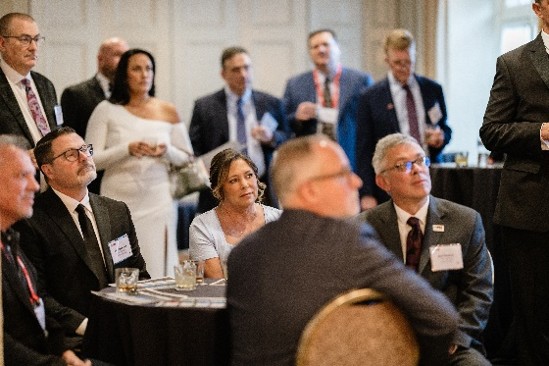
The Petroleum Equipment Institute (PEI) is the leading international trade association representing companies involved in the manufacture, distribution, installation, service, and testing of petroleum marketing and energy handling equipment. Founded in 1951 and headquartered in Tulsa, Oklahoma, PEI serves a global membership base spanning all 50 U.S. states and more than 80 countries.
PEI’s membership reflects the full ecosystem of the energy handling equipment industry — manufacturers, distributors, service providers, and contractors supporting infrastructure such as retail and commercial fueling stations, terminals, bulk plants, and related fueling systems.
At its core, PEI functions as the industry’s central authority and knowledge hub, providing technical practices, education, and connectivity that enable safe, reliable, and efficient fuel and fluid handling operations. PEI members are the primary link between energy and transportation.
Why PEI Matters
For professionals and organizations operating in the fuel and energy handling space, awareness about PEI is essential for three primary reasons:
1. Industry Standards and Best Practices
PEI develops and maintains peer-reviewed Recommended Practices (RPs) that address critical operational, safety, and compliance challenges. These technical documents are widely recognized across the industry and regulatory community as foundational guidance for installation, maintenance, testing, and inspection activities.
In a sector where improper handling of equipment can result in environmental, safety, and financial risks, these practices provide a consistent, vetted framework for decision-making and execution.
2. Workforce Development and Professional Growth
The industry continues to face workforce challenges, including technician shortages and increasing technical complexity. PEI plays a central role in addressing these gaps by offering training, education, and certification pathways that help professionals build competency and credibility.
For companies, engagement with PEI directly supports employee development, operational consistency, and long-term workforce sustainability.
3. Industry Connectivity and Advocacy
PEI convenes the industry through conferences, committees, and working groups — creating opportunities to share knowledge, address emerging challenges, and align on solutions. These connections are vital for staying ahead of regulatory changes, technological advancements, and evolving customer expectations.
Resources, Tools, and Events Offered by PEI
PEI delivers a robust set of resources designed to support both organizations and individual professionals across the industry.
Technical Resources and Recommended Practices
PEI’s RPs serve as one of its most recognized and impactful offerings. These documents are developed through industry collaboration and address real-world operational issues — from equipment installation and inspection to maintenance, testing, and decommissioning.
Associated RP testing allows professionals to validate their understanding of these practices, reinforcing consistency and accountability across the field.
Training and Education
PEI offers a comprehensive portfolio of training and educational tools, including:
- Online coursework and learning paths.
- Technical manuals and reference materials.
- Entry-level through advanced training programs.
These resources are designed to support understanding of the design, installation, operation, maintenance, and testing of energy handling equipment.
PEI Education Center
A cornerstone of PEI’s training strategy, the PEI Education Center is an online platform designed to support workforce development across the industry.
Key features include:
- Structured courses covering foundational and advanced topics.
- Flexible training models (individual, bundled, and enterprise solutions).
- Programs designed for onboarding new employees and advancing technical skills.
The learning platform enables companies to scale training efforts while tracking employee progress and competency development.
Events and Conferences
PEI hosts and supports a wide range of events — both in-person and virtual — focused on education, networking, and business improvement.
Notable offerings include:
- PEI Convention at the National Association of Convenience Stores Show – the industry’s flagship event, combining education sessions, networking, and a large-scale trade show.
- Executive Summit and Management Conferences – targeted leadership and operational discussions.
- Specialized conferences (Women in Industry and Young Executives).
- Webinars and ongoing virtual programming.
These events provide direct access to industry insights, emerging trends, and peer collaboration opportunities.
Industry Communications
PEI also serves as a trusted source of industry information through publications such as the bi-monthly Tulsa Letter and quarterly PEI Journal as well as newsletters and industry alerts covering regulatory developments, industry news, technical updates, and market trends.
What is New and Upcoming
PEI continues to evolve in response to industry needs, with a strong focus on safety, workforce development, industry standardization, and professional credentialing.
PEI’s Commitment to Safety
One of PEI’s newest initiatives is its renewed emphasis on industry safety. Safety is a core focus of PEI’s work, embedded across its standards, training, and industry engagement.
PEI promotes safe operations through its RPs — peer-reviewed technical standards that guide proper installation, inspection, maintenance, and testing of equipment.
This foundation is reinforced through training and education, including the PEI Education Center, which integrates safety principles into both entry-level and advanced coursework to build consistent, real-world competency across the workforce.
PEI also advances safety through industry collaboration, using events and forums to share lessons learned, address emerging risks, and align on best practices.
In short, PEI helps establish the standards, training, and industry alignment needed to operate safely and responsibly.
Expansion of the PEI Education Center
The Education Center is expected to grow in both course offerings and capabilities, with continued emphasis on:
- Foundational training for new entrants to the industry.
- Advanced technical instruction for experienced professionals.
- Scalable solutions for companies managing large teams.
Future development includes tighter integration between training pathways and certification programs, creating a more cohesive learning ecosystem.
PEI Technical Certification
One of the most significant developments underway is the expansion of PEI Technical Certification programs.
These certifications are designed to:
- Validate technical competency aligned with industry practices.
- Establish consistent benchmarks for service technicians and installers.
- Provide employers with a reliable method to assess workforce capability.
Certification tied to PEI’s RPs and Education Center coursework represents a major step toward professionalizing the technician workforce and improving overall industry quality and safety.
Continued Focus on Workforce Development
PEI’s forward-looking initiatives reflect a broader industry priority: attracting, training, and retaining the next generation of skilled professionals.
By linking industry practices, training, and certification, PEI is building a more structured and sustainable pipeline for workforce development — helping companies meet both current demands and future challenges.
Conclusion
PEI occupies a unique and critical position within the energy handling equipment industry. As both a practice-setting authority and a workforce training and development leader, PEI provides the tools, resources, and convening power necessary to drive safety, consistency, and innovation in the energy handling equipment industry.
For industry professionals and organizations alike, engagement with PEI is not just beneficial — it is increasingly essential. Whether through technical guidance, training programs, certification pathways, or industry events, PEI offers a comprehensive framework for operating effectively in a complex and evolving environment.
As the energy handling equipment industry continues to adapt, PEI’s role will only grow in importance — serving as the foundation for technical excellence, professional growth, and industry-wide alignment.
Scott Boorse is the vice president of technical programs and industry affairs at PEI. He can be reached at sboorse@pei.org.
Tribal Waste and Response Steering Committee and EPA UST Priorities Document
The Institute for Tribal Environmental Professionals (ITEP) Tribal Waste and Response Steering Committee (TWAR SC) is a U.S. Environmental Protection Agency (EPA) Tribal Partnership Group comprised of subject matter experts from federally recognized Tribal Nations and Alaska Native Villages from various EPA regions. The TWAR SC has two main objectives which includes the development of the annual Tribal Lands and Environmental Forum (TLEF) and an EPA Priorities Document that is produced every two years.
TLEF was first hosted in August of 2010 and has continued in a new community each year with participation from as many local Tribes as possible. Each year, there is a field trip to a Tribal gas station to provide participants with an education about all things UST-related, both inside and outside of the station. This year’s forum will be no different as we will travel to The Chickasaw Nation of Oklahoma’s site in Davis. For two days following the field trip, there are various tracks hosted by Tribal and EPA members to help attendees learn how to improve operational compliance and maintenance at their own facilities.
In addition to TLEF, the TWAR SC creates a biannual priorities document. The intention of the document is to communicate the needs of Tribes, influence policy, and determine useful actions for the protection of health, culture, and natural resources in respect to issues related to the EPA Office of Land and Emergency Management.
The current Priority Document includes the following items related to the Office of Underground Storage Tanks:
- Include an equipment manufacturer’s component in the Facility Specific Compliance Plan (FASCOMP) tool, and present training and updates on involvement at the 2026 and 2027 TLEFs. This should include resources and handouts.
- Demonstrate the FASCOMP tool at the regional level for Tribal environmental staff, so they can ensure compliance at their facilities.
- Work with the Tribal Convenience Store Association and the National Association of Convenience Stores to roll out the online A/B Operator Training.
- Target education to Tribal environmental professionals to understand how to work with owner/operators to establish roles and responsibilities that improve compliance with UST closure and removal plans.
- Continue to provide outreach materials and training to the service industry highlighting the difference between State and Tribal (i.e. Federal) processes for UST operations.
- Continue providing training for Tribes about state-funded financial responsibility, which includes the topic of how Indian Country UST facilities may participate in some state-funded programs.
- Work with OBLR to create resources and opportunities for collaboration to address UST related issues through the 128(a) Program.
- Provide education related to emerging fuels to Tribal professionals.
These priorities were shared with EPA in January 2026 and will potentially remain in place through December 2027, at which time updates will be available.
Two great resources for information related to ITEP and the TWAR SC include:
The TWAR SC encourages all Tribal environmental professionals to share their questions or concerns with them. Waste and Response contacts include Manager Todd Barnell and Assistant Manager Julie Meikowski.
Tracy Horst is the director of environmental compliance for the Choctaw Nation. She can be reached at thorst@choctawnation.com.
Issue: #97 | View Archives
Connect With Us

Sign up for our monthly
e-newsletter

