
-
Massachusetts Wastewater Management Training Program Now Accepting Applications
Wastewater operators, managers and supervisors in Massachusetts are eligible to apply for NEIWPCC’s Wastewater Management Training Program. This year-long program provides wastewater operators with the essential skills needed for leadership positions. Candidates can be nominated by their supervisors or self-nominated. Participants must commit to attending the monthly classes, typically held at the Richard Alden Training…
-
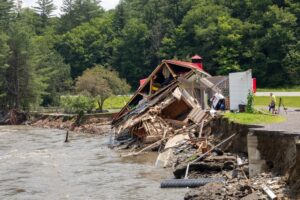
Mutual Aid: Preparing Wastewater Treatment Plants for Emergency Response
By Sarita Croce, David Aucoin, Gary Marino and Thomas Guthlein In July of 2023, a flood event in Vermont impacted the operational capabilities of 28 wastewater facilities and rendered one treatment plant irreparably damaged. Flood events like these often reveal vulnerabilities within water and wastewater infrastructure. While emergency response plans exist, many facilities are ill-equipped…
-
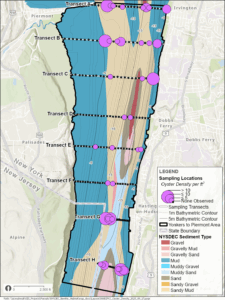
New Project Maps Oyster Density and Sediment Type in the Hudson River
This past summer, NEIWPCC and the New York State Department of Environmental Conservation (NYSDEC) hired a contractor to collect data on the density and habitat of American oyster (Crassostrea virginica) in the lower Hudson River. This Oyster Density and Sediment Characterization project sampled the oyster population between Piermont and Yonkers, New York, complementing prior studies…
-
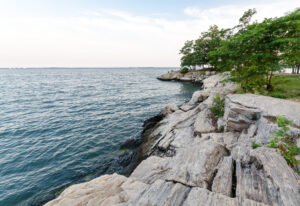
Registration Opens for the Northeast Aquatic Biologists Conference
The annual Northeast Aquatic Biologists (NAB) Conference will take place in Westbrook, Connecticut, February 4-6, 2026. The event provides a forum for sharing knowledge, collaboration, and networking among the aquatic and environmental biologist community in the Northeast. The agenda includes sessions from more than 50 speakers and 30 posters surrounding topics such as invasive plants,…
-
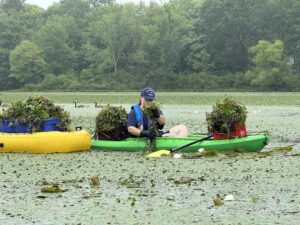
Volunteers Help Clear Invasive Plant from Waterbodies
This past spring and summer, community volunteers helped remove water chestnut, an aquatic invasive plant, from waterbodies in Rhode Island and southern Massachusetts. Working by boat across 16 events, a total of 256 community members hand-pulled an estimated 23 cubic yards, totaling approximately 6,505 pounds of plant material. These efforts are part of a water…
-
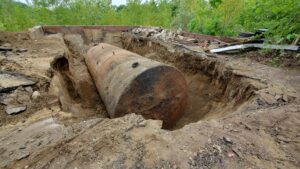
Self-Paced Training Delivers Educational Resources Directly to Tribal Operators
The U.S. Environmental Protection Agency (EPA) Office of Underground Storage Tanks works directly with nearly 200 federally recognized tribes to mitigate the risk of fuel leaks from underground storage tanks (USTs) and support cleanup efforts when necessary. To assist with this work, NEIWPCC collaborated with the EPA to create a free self-paced training course, designed to educate operators in Indian Country about how to properly maintain and operate UST systems. The course was designed to make training resources…
-

National Nonpoint Source Workshop Provides Skill Development, Collaboration and New Ideas
NEIWPCC hosted the three-day National Nonpoint Source (NPS) Training Workshop in Baton Rouge, Louisiana in October. The event brought together more than 200 federal, state, tribal, nation, territorial, and other NPS program practitioners involved with activities under Section 319 of the Clean Water Act. Last held in 2023, the workshop provides a forum for discussion and coordination…
-

Submerged Aquatic Vegetation Mapping of Long Island Sound Finds Net Increase in Eelgrass Habitat
The University of Rhode Island’s Environmental Data Center recently completed a major update of submerged aquatic vegetation (SAV) mapping for the Long Island Sound (LIS) and the Peconic Estuary (PEC), marking the first region-wide survey of this kind since 2017 for LIS and 2014 for the Peconic. The project, funded by the U.S. Environmental Protection…
-
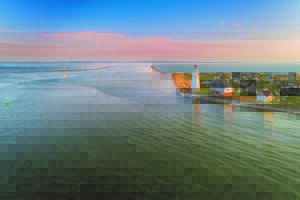
New Action Agenda Outlines Long Island’s Clean Water Goals
The New York State Department of Environmental Conservation (NYSDEC) released the Long Island Watershed Action Agenda, a ten-year strategic plan for improving water quality on Long Island, including aquatic habitat conservation and groundwater protection. The Action Agenda is part of the NYSDEC’s Long Island Watershed Program, which is supported by NEIWPCC staff. “The Long Island Watershed…
-

Webinar Highlights Colorado’s Watershed Rapid Assessment Program
The next webinar in the National 303(d) Restoring Our Impaired Waters Webinar Series will cover the development of an innovative watershed management tool through Colorado’s Watershed Rapid Assessment Program (WRAP). The event is scheduled for November 17, 1-2:30 p.m. EST via Zoom. The Colorado Department of Public Health and Environment (CDPHE) partnered with Colorado State…