
-
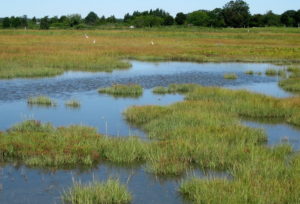
New Report Examines Habitat Connectivity in the Long Island Sound
The Long Island Sound Study (LISS) and its partners have a new resource to inform habitat conservation actions. The “Assessment of Existing Coastal Habitat Connectivity Data and Models for Feasibility and Use in the Long Island Sound” report was produced by WSP USA, an engineering consulting firm, for LISS. The document identifies relevant habitat connectivity…
-
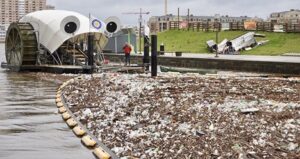
Taking Out the Trash: Implementing Trash Total Maximum Daily Loads in Maryland
The latest installment of the National 303(d) Restoring Our Impaired Waters Webinar Series focused on designing and implementing trash total maximum daily loads (TMDLs) in Maryland. Held on February 25, more than 120 professionals from across the country joined the event to hear from Anna Kasko, senior regulatory and compliance engineer for Maryland’s Department of…
-
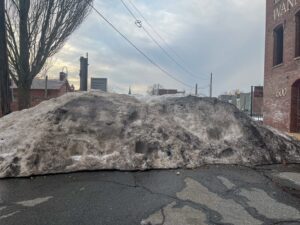
Proper Snow Storage Can Decrease Impact of Snowmelt Runoff Pollution
Shrinking snow piles are one of the first signs that spring is on the way. Over the long winter, these piles accumulate pollutants like road salt, sand, automotive oils, car exhaust, litter and pet waste. When spring thaw occurs, these contaminants can deteriorate water quality, impacting drinking water supplies, fisheries and wildlife. Nonpoint source pollution,…
-
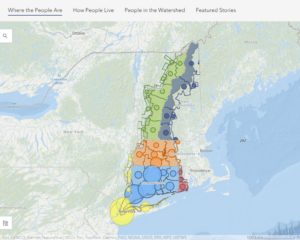
New StoryMap Explores the Land and People of the Long Island Sound Watershed
From the forested headwaters of the Connecticut River along the Canadian border, to the bustling urban landscape of Bronx, New York, a new StoryMap provides insight on the people that live and work within the Long Island Sound watershed. Created by the University of Connecticut (UConn) Center for Land Use Education and Research (CLEAR) and…
-
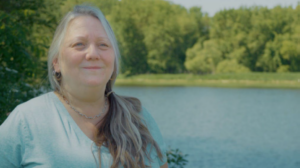
New Videos Explore the Relationship Between the Missisquoi River and Abenaki Culture
In northern Vermont, a Missisquoi River Basin Association (MRBA) project shares the history and relationship between the Missisquoi River and Abenaki culture through two new educational films. “Exploring Our Cultural Waters” is a collaborative project between the MRBA and Peregrine Productions and was funded by a Champlain Valley National Heritage Partnership special programs grant. The…
-
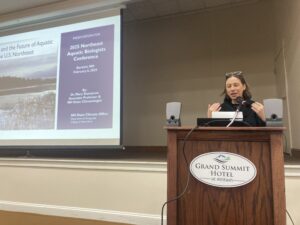
Northeast Aquatic Biologists Unite to Advance Water Science
More than 170 aquatic and environmental biologists gathered in Bartlett, New Hampshire for the annual Northeast Aquatic Biologists (NAB) Conference. Attendees represented state, federal, tribal and municipal governments, the private sector, academia, and watershed organizations from across New England and New York to share research and network. The three-day conference opened with remarks from NEIWPCC…
-
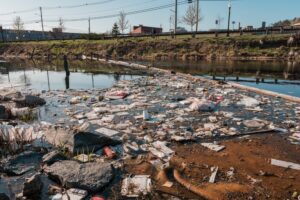
Upcoming Webinar on Designing and Implementing Trash TMDLs
The next webinar in the National 303(d) Restoring Our Impaired Waters Webinar Series will focus on the state of Maryland’s experience with establishing some of the country’s first total maximum daily loads (TMDLs) for trash pollution. The event is scheduled for February 25, 1-2 p.m. EST via Zoom. Presenter Anna Kasko will describe the approach to initiating TMDLs…
-
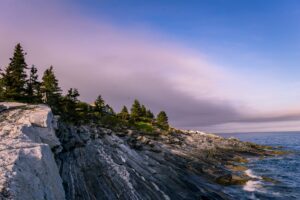
Registration Opens for the Annual Nonpoint Source Conference
Early bird rates are now available The 35th Annual Nonpoint Source (NPS) Conference will take place in Freeport, Maine on April 9-10, with the theme “Nonpoint Source Pollution and Clean Water: Perspectives from the Arts, Sciences and Humanities.” The event brings together watershed professionals from state and federal agencies, tribes and nations, academia, private organizations,…
-
Clean Water Podcast Features Water Quality Trading Program in Oregon
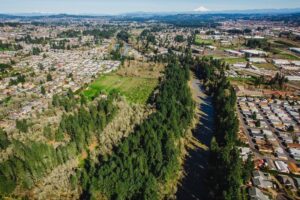
In this episode of the “Clean Water Pod” podcast, listeners head to Oregon’s salmon-rich Tualatin River to learn about a unique approach to addressing temperature pollution. Host Jeff Berckes speaks with two professionals about the water quality trading credit program initiated to address the river’s Total Maximum Daily Load (TMDL) for temperature. They discuss why…
-
$75,000 Awarded to Map Oyster Population in the Lower Hudson River Estuary
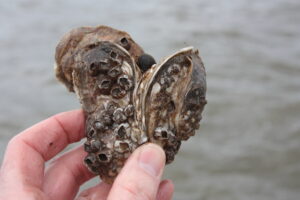
Mapping will fill a gap in oyster distribution data between the Piermont Pier south to Yonkers The New York State Department of Environmental Conservation (DEC) announced the award of $75,000 to Henningson Durham & Richardson Architecture and Engineering, P.C. (HDR) to map the lower Hudson River oyster population. The survey of American oyster (Crassostrea virginica) distribution…