
-

Letter to Congress Outlines Potential Impacts of Budget Cuts on Clean Water Act Programs
In response to the President’s FY 2026 Discretionary Budget Request and the EPA’s FY 2026 Budget in Brief, NEIWPCC recently sent a letter to all members of the U.S. House of Representatives and the U.S. Senate voicing concern about potential impacts to state and interstate Clean Water Act (CWA) programs. The proposed budgets contain significant…
-

Celebration Honors 40 Years of Action to Improve the Long Island Sound
NEIWPCC joined senior officials from the EPA, Connecticut and New York, along with many other partners, on June 20 in Rye, NY, to celebrate 40 years of progress in restoring and protecting the Long Island Sound. The event also marked the announcement of a new plan that sets a 10-year roadmap to revitalize the Sound…
-

Clean Water Podcast Explores Successful Maintenance of Water Quality in Colorado Reservoirs
The latest episode of the “Clean Water Pod” podcast features Dillon Reservoir in Summit County, Colorado. Known for its clear, deep blue waters, the reservoir serves as a drinking water source for Denver. Despite an increase in development and population in the watershed, the reservoir’s water quality has remained consistent since the 1980s. Host Jeff…
-
Registration Opens for the National Tanks Conference
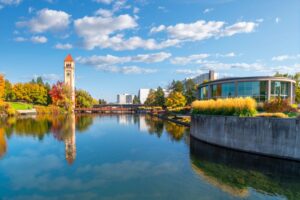
Early bird rates are now available. The 28th National Tanks Conference (NTC) will take place in Spokane, Washington on September 23-25. The event brings together underground storage tank professionals, including tank inspectors; cleanup specialists; state, tribal, and territorial employees; federal regulators; and industry representatives to network and learn about emerging issues, policy and equipment. Session…
-
Real-Time Data on Coastal Conditions Aids Hudson River Safety
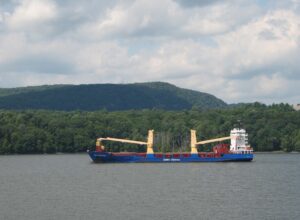
Navigating New York waterways just got a bit easier. The National Oceanic and Atmospheric Administration (NOAA) and the New York State Department of Environmental Conservation (NYSDEC) announced the establishment of the Hudson River Estuary Physical Oceanographic Real-time System (PORTS®). The system delivers real-time oceanographic and meteorological observations that can improve maritime safety and inform coastal resource…
-

Building Operator Skills: Meet NEIWPCC Trainer Tom Bienkiewicz
By Beth MacBlane Walking to grammar school, Thomas (Tom) Bienkiewicz recalls crossing over the Blackstone River in Blackstone, Massachusetts, always curious to see what color the river would be running that day. Sometimes it would be red, blue or green, with a cloud of suds standing six feet tall pushed up against the dam. This…
-
New Research Measures Suitability of Reducing Phosphorus in Lake Champlain Through Floodplain Restoration
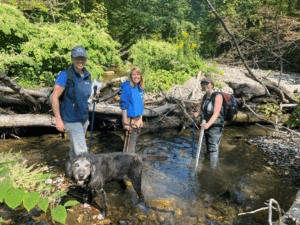
In recent years, Lake Champlain waters have been impaired by excess phosphorus, largely due to the number of surrounding farmlands. Lake Champlain Basin Program’s (LCBP) Long-Term Monitoring Program estimates that 38% of the total phosphorus input each year comes from agricultural usage. Additional pollution sources include runoff from roads, developed areas and lawns, as well…
-
Seven Pillars of the Drinking Water Source Protection Program
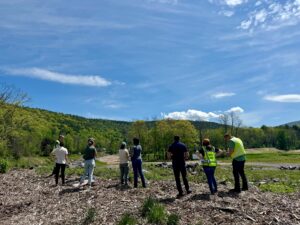
New York state’s Drinking Water Source Protection Program (DWSP2) is a locally led, state-supported program that empowers municipalities to proactively protect their public drinking water sources. Since the inception of the program in 2019, DWSP2 has evolved and grown, supporting more than 100 municipalities with 2.5 million water consumers. The program is committed to increasing…
-

NEIWPCC Staff Advocate for Water Policy at National Fly-In
Every April, water professionals convene in Washington D.C. for the National Water Policy Fly-In, a two-day conference focused on ongoing challenges and policy changes in the water sector. Throughout the event, participants have the opportunity to hear from industry leaders, network with colleagues and engage directly with representatives from Congress. This year, NEIWPCC sent a small…
-
New Bioextraction Research Informs Water Quality Work in the Long Island Sound
Nutrient pollution resulting from wastewater, fertilizer and stormwater runoff negatively impacts the health of the Long Island Sound and its coastal bays, harbors, and tidal estuaries. One way to address this pollution is through bioextraction — a method that combines growing and harvesting shellfish and seaweed for the purpose of removing nitrogen and other nutrients…