
-
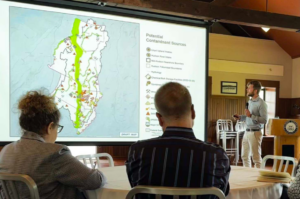
Michael Forgeng: Protecting Drinking Water in New York State
Sifting through old paper files in the records room of a Town Hall basement, NEIWPCC Environmental Analyst Mike Forgeng is searching for drinking water well logs, groundwater assessments, and other geologic records to better understand the area at hand. This data, in addition to what Forgeng can find through public and state resources, will become…
-
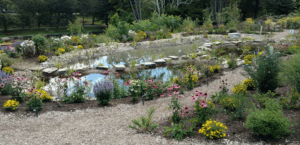
Long Island ‘Garden Rewards’ Program Reimburses Property Owners for Water Saving Efforts
Long Island, New York property owners can help reduce stormwater runoff and nitrogen pollution in local waterways through the annual Garden Rewards Program. This initiative provides a financial reimbursement of up to $500 for implementing water saving projects in their yards, including rain gardens, native plantings, and rain barrels. Property owners in Suffolk and Nassau…
-
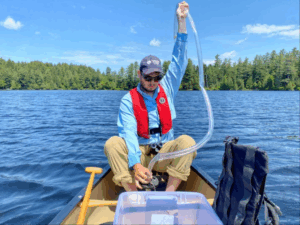
Fifty New York Lakes Receive Water Quality Assessment
Targeting unassessed – or not recently assessed – waterbodies in the New York portion of the Lake Champlain watershed, trained community volunteers and field technicians at Paul Smith’s College Adirondack Watershed Institute (PSC AWI) collected water quality data on 50 lakes. Using this information, PSC AWI staff developed watershed action plans for three priority water…
-
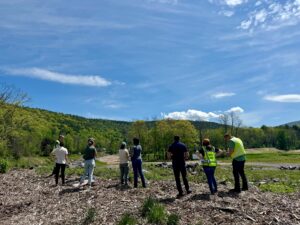
Seven Pillars of the Drinking Water Source Protection Program
New York state’s Drinking Water Source Protection Program (DWSP2) is a locally led, state-supported program that empowers municipalities to proactively protect their public drinking water sources. Since the inception of the program in 2019, DWSP2 has evolved and grown, supporting more than 100 municipalities with 2.5 million water consumers. The program is committed to increasing…
-
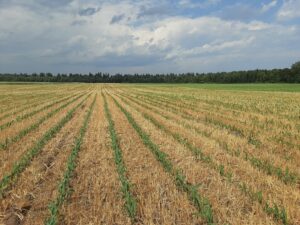
Working the Land to Love the Lake: How Farmers Make a Difference in New York’s Lake Champlain Watershed
Nestled between New York, Vermont, and the province of Québec, Canada, spans one of the largest freshwater lakes in North America: Lake Champlain. Like many lakes, phosphorus from nonpoint source pollution – urban, agricultural and forest runoff – is the primary threat to water quality. High concentrations of this nutrient can lead to algal blooms…
-
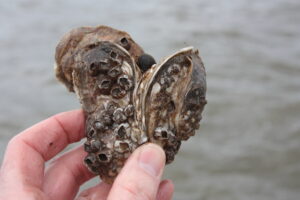
$75,000 Awarded to Map Oyster Population in the Lower Hudson River Estuary
Mapping will fill a gap in oyster distribution data between the Piermont Pier south to Yonkers The New York State Department of Environmental Conservation (DEC) announced the award of $75,000 to Henningson Durham & Richardson Architecture and Engineering, P.C. (HDR) to map the lower Hudson River oyster population. The survey of American oyster (Crassostrea virginica) distribution…
-
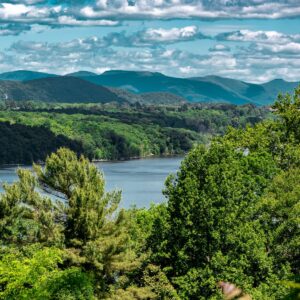
New York Offers Free Technical Assistance to Protect Drinking Water Sources
The New York State Drinking Water Source Protection Program (DWSP2) is a locally led, state-supported program that empowers municipalities to take action to improve and protect their public water sources and surrounding environment. The DWSP2 announced the availability of free technical assistance for up to 30 volunteer communities to develop and implement programs that proactively protect public drinking water…
-
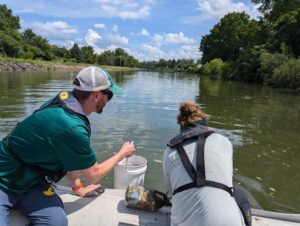
Multiplate Sampling on the Genesee River in New York State
This summer, NEIWPCC staff joined the New York State Department of Environmental Conservation (NYSDEC) to perform multiplate sampling for macroinvertebrates on the Genesee River near Rochester, New York. Multiplate samplers are designed to attract macroinvertebrates and other aquatic organisms. This sampler is made out of three 6-inch square tempered hardboard plates, separated by spacers, and…
-
Dam Removal Advances Atlantic Salmon Restoration in Lake Champlain Basin
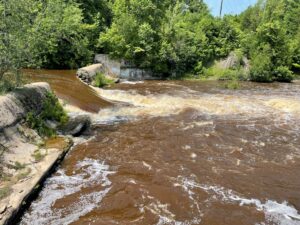
Two dams that stand between Atlantic salmon and upstream spawning habitat on the Saranac River in New York are coming down, the culmination of years of collaboration among the U.S. Fish and Wildlife Service, Trout Unlimited and other public-private partners. The Lake Champlain Basin Program supported the project by providing $370,000 in funding through its…
-
Harmful Algal Blooms Conference Focuses on Nationwide Solutions
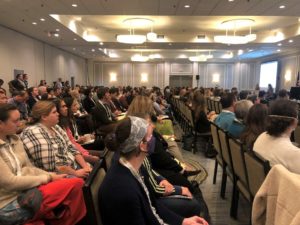
This past October, students, scientists, and industry professionals traveled to Albany, New York to kick off the 11th U.S. Symposium on Harmful Algae. The six-day conference operated under the theme “Science to Support Solutions from Shore to Shore,” to recognize that harmful algal blooms (HABs) present a nationwide challenge that impacts a variety of ecosystems.…