
-
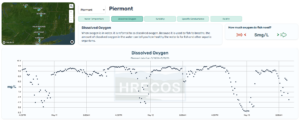
Explore Hudson River Water Quality with Redesigned Website
Researchers, educators, anglers, paddlers and local communities along the Hudson and Mohawk Rivers in New York can now access high-frequency water quality and weather data through a newly redesigned Hudson River Environmental Conditions Observing System (HRECOS) website. The site aims to make the live and historical data from 15 monitoring stations along the waterways more…
-
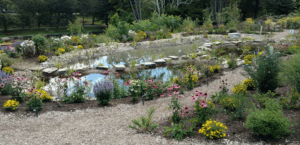
Long Island ‘Garden Rewards’ Program Reimburses Property Owners for Water Saving Efforts
Long Island, New York property owners can help reduce stormwater runoff and nitrogen pollution in local waterways through the annual Garden Rewards Program. This initiative provides a financial reimbursement of up to $500 for implementing water saving projects in their yards, including rain gardens, native plantings, and rain barrels. Property owners in Suffolk and Nassau…
-
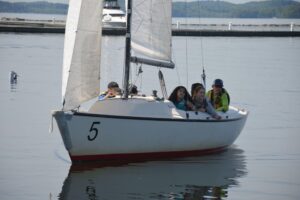
All Aboard Lake Champlain’s Floating Classroom
While sailing and exploring the Lake Champlain ecosystem, students receive a hands-on education with the Community Sailing Center (CSC), a local nonprofit organization. In 2025, CSC engaged 688 students from the Burlington and Winooski school districts — Vermont’s most economically underserved districts — in two educational programs. The curriculum focused on experiential STEM learning, watershed science, sailing,…
-
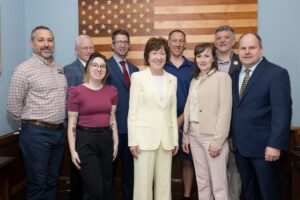
NEIWPCC Staff Champion Water Policy, Funding at National Fly-In
Water professionals from across the country convened in Washington, D.C. for Water Week 2026, an annual event featuring presentations, networking events, policy briefings, and meetings surrounding water sector challenges. A pillar of the event, the two-day National Water Policy Fly-In focuses on federal policy and meetings on Capitol Hill, where attendees can engage directly with…
-
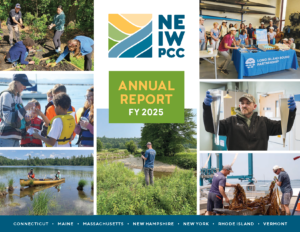
Annual Report Spotlights NEIWPCC’s New Strategic Plan
NEIWPCC’s fiscal year 2025 annual report, which is structured around the new five-year strategic plan, is now available online. It provides an overview of the four strategic priorities that comprise the plan and breaks down NEIWPCC’s work and projects from this year, emphasizing how they each fit into the overall roadmap of the organization’s mission.…
-
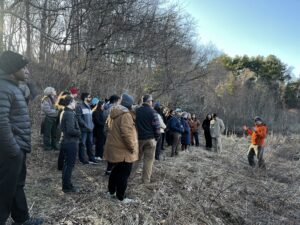
36th Annual Nonpoint Source Conference Dives Into Pollution Problems and Solutions
For more than three decades, NEIWPCC’s Annual Nonpoint Source Conference has served as a forum for dialogue around nonpoint source pollution work and projects in the Northeast. This year’s event welcomed more than 175 watershed professionals and students from across the region to the coastal town of Plymouth, Massachusetts, where nonpoint source pollution is a…
-
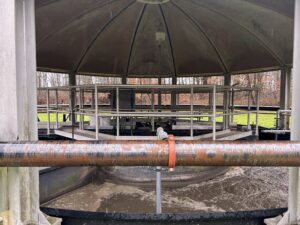
Grants Support Wastewater Training and Technical Assistance at Rural Utilities
Last month, NEIWPCC launched two new self-paced wastewater training courses to support the professional development of industry personnel. The online, on-demand courses offer accessible training to a wide audience, including rural, small and tribal publicly owned treatment plants that may not have the ability to attend in-person training. The courses are being offered free of…
-
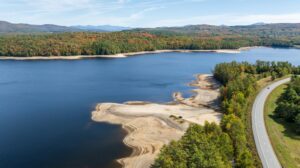
When Wells Run Dry: Facing New Hampshire’s Drought
Imagine turning on your faucet and nothing coming out: No water for drinking, cooking, bathing or running household appliances. This is what hundreds of New Hampshire residents experienced in the fall of 2025. The culprit: their private wells went dry due to low groundwater levels. A long-term drought precipitated the decline in groundwater, wreaking havoc…
-
Tapping Into “The Value of Water Campaign”
A water main breaks in the U.S. every two minutes; one in three water sector employees will be eligible to retire by 2033; and each year 1.7 trillion gallons of drinking water is lost to faulty, aging, or leaky pipes. These are some of the key statistics that “The Value of Water Campaign” champions, aiming…
-
NEIWPCC Comments on Proposed WOTUS, Water Quality Rules
On behalf of its member states, NEIWPCC recently submitted comments to the Oceans, Wetlands and Communities Division, Office of Water (4504-T), U.S. Environmental Protection Agency (EPA), concerning a proposed rule by the EPA and the U.S. Department of the Army Corps of Engineers’ (USACE) to revise the definition of “Waters of the United States” (WOTUS)…