
Last month, NEIWPCC launched two new self-paced wastewater training courses to support the professional development of industry personnel. The online, on-demand courses offer accessible training to a wide audience, including rural, small and tribal publicly owned treatment plants that may not have the ability to attend in-person training. The courses are being offered free of charge as part of NEIWPCC’s Training and Technical Assistance Program, supported by two U.S. EPA grants.
The Basic Municipal Wastewater Treatment course provides an overview of a typical municipal wastewater treatment facility. It offers foundational knowledge for both new and existing facility staff who will earn 20 wastewater training contact hours (TCHs) upon successful completion.
“In this class, participants learn anything and everything from when wastewater leaves a house to when it leaves a treatment facility,” said Environmental Engineer Josie Fazio. “It’s intended to be a starting point for those entering the industry and covers a lot of information.”
The second new course builds a greater understanding of secondary treatment, which uses biological processes to continue treating the water. Offering 8 TCHs, Wastewater Process, Troubleshooting, and Optimization helps operators not only recognize, troubleshoot, and resolve process problems that can lead to non-compliance, but also systematically work to optimize treatment.
“If you don’t have the time to travel to a class, self-paced classes offer a flexible approach where you can work on your own pace,” said Fazio. “If you need something to be repeated you can go back, or if you already know something you can move quickly through.”
The online courses are delivered through an interactive platform that guides users through the material via structured screens. It includes a mix of written content, knowledge checks, and additional media — such as embedded videos — that supplement and reinforce the learning objectives. While there is no live instruction, the experience is designed to be engaging and comprehensive. To earn a certificate of completion, learners must visit all content and receive a final quiz grade of 70% or higher.
Eight additional self-paced online training courses are in process, covering topics such as nutrient removal; PFAS in wastewater and biosolids; emergency planning and resiliency; and regulations, permits and reporting. All self-paced courses are available on NEIWPCC’s training registration webpage; course links will be sent via email upon registration.
In addition to the expanded course catalog, NEIWPCC is further supporting the professional growth of wastewater operators by providing scholarships to attend state-based management training programs. These 8-12 month training programs, or schools, equip participants with leadership skills through education, networking, and real-world experience, preparing future leaders in the industry. Scholarships are intended for staff of small, rural, and tribal systems.
The final aspect of this funding supports site-specific technical assistance for eligible treatment plants. Using a flexible approach to meet the facility’s needs, the assistance targets wastewater process optimization and improving permit compliance. This can include collection and treatment system performance, identification and planning for funding capital projects, and updating records. Additional support areas center around preparedness for extreme weather events and natural hazards as well as preparing for nutrient and PFAS permit limits. Assistance is available for communities that run their own treatment facilities, as well as those that act as satellite systems, sending their wastewater to a neighboring plant.
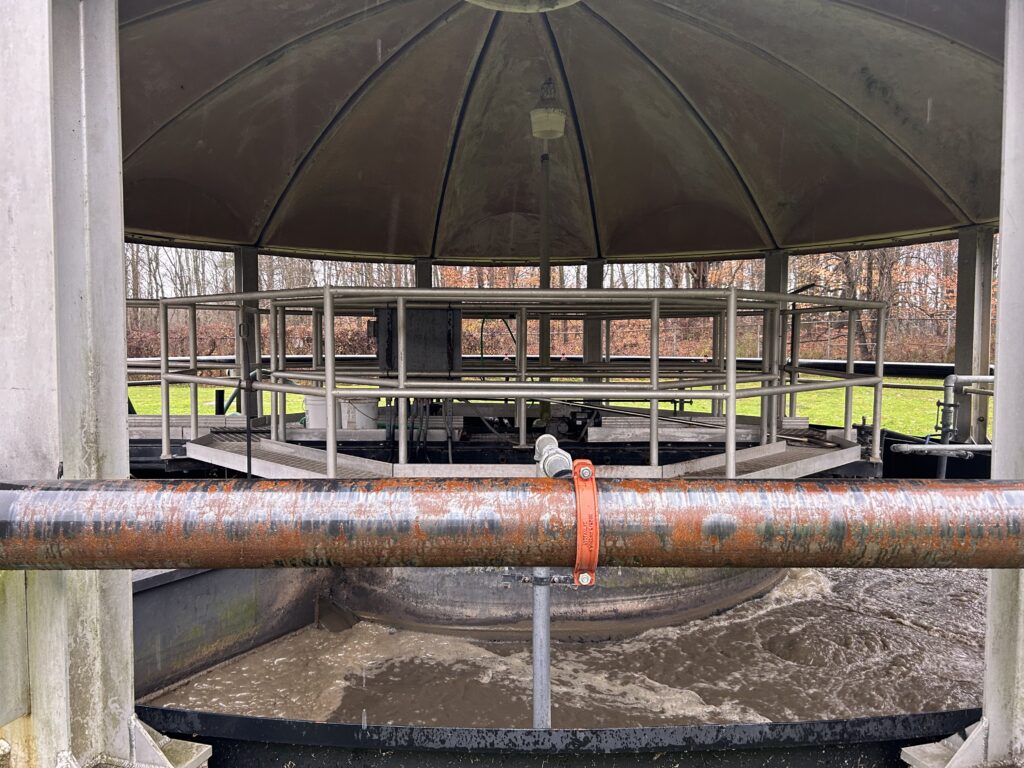
Environmental Analyst Nick Capozza is spearheading technical assistance in New York state. By meeting with community leaders and contract operators in the village of Parish, they were able to identify an interim solution to help bring the facility into permit compliance until a long-term solution is identified. In another instance, Capozza diagnosed a pump that was running inefficiently and using more electricity than needed at the Oriskany Falls wastewater treatment plant, making it a prime target for replacement.
“Since resources are constrained, participating utilities are getting the benefit of years and years of NEIWPCC technical assistance to assist them in coming into compliance and making the water quality better,” said Capozza. “It’s not costing them anything other than a little bit of time, but once we understand what they need from us, we can help them and even carry it forward for them.”
The three-pronged approach of these grants aim to expand the skills and ability of wastewater treatment plant personnel to efficiently operate, maintain, and manage their infrastructure and plan for future challenges. Through targeted outreach to communities in need, NEIWPCC is increasing access to technical, financial, and managerial wastewater training that will ultimately improve permit compliance and protect water quality.
More information is available on the Training and Technical Assistance Program webpage.
NEIWPCC’s Training and Technical Assistance Program is supported by EPA Grants TW84116301 and TW84064801.