
-
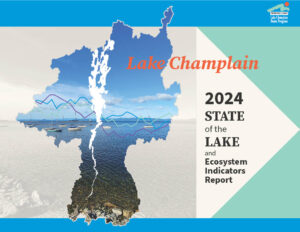
Lake Champlain’s State of the Lake Report Highlights Progress and Challenges
The Patrick Leahy Lake Champlain Basin Program (LCBP), a NEIWPCC program partner, released an updated “State of the Lake and Ecosystems Indicators Report.” Drawing on the most recent scientific data, the report provides a comprehensive assessment of the condition of Lake Champlain to be used by resource managers and the public. Produced every three years, the…
-
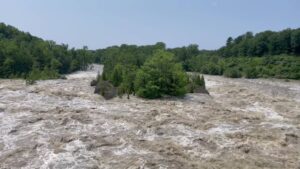
Maine, Vermont Floods Underscore Climate Change Impacts
As powerful floods swept through Vermont and Maine in 2023 and early 2024, they left communities struggling to cope and highlighted the increasing risks posed by climate change. Record rainfall caused rivers to surge, inundating towns, damaging infrastructure, crippling transportation networks, and forcing evacuations. In Maine, the Kennebec River in Augusta reached 25 feet, eight…
-
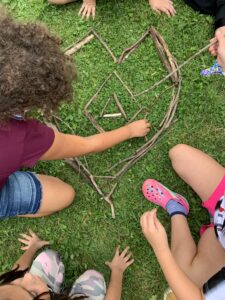
Environmental Stewardship Through Art
By James Brangan Art inspires appreciation, which spurs understanding that leads to positive action. In 2019, the Lake Champlain Basin Program (LCBP) established an Artist-in- Residence (AiR) grant program to help artists, students, and their audiences make those connections. In the first year of the program, a grant supported the Friends of the Winooski River,…
-
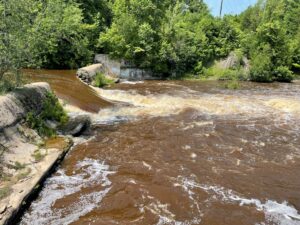
Dam Removal Advances Atlantic Salmon Restoration in Lake Champlain Basin
Two dams that stand between Atlantic salmon and upstream spawning habitat on the Saranac River in New York are coming down, the culmination of years of collaboration among the U.S. Fish and Wildlife Service, Trout Unlimited and other public-private partners. The Lake Champlain Basin Program supported the project by providing $370,000 in funding through its…
-
Beneath the Surface
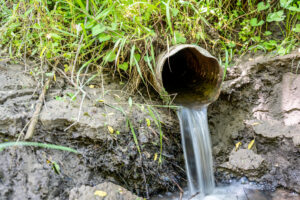
By Matthew C. H. Vaughan In forested watersheds, we are accustomed to seeing tranquil headwater streams and cascading rivers flow through the trees. In cities, gutters and storm drains replace these natural features to move water through the urban environment. For agricultural landscape, however, hidden “tile drains” make up water conveyance systems that are often…
-
Lake Champlain Basin Program Seeks Reviewer for Clean Water Accounting Methods
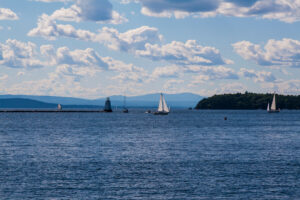
The Lake Champlain Basin Program (LCBP), in coordination with NEIWPCC, has issued a Request for Proposals (RFP), seeking an external reviewer to inspect the clean water accounting methods used by the Vermont Department of Environmental Conservation and New York State Department of Environmental Conservation. The reviewer will examine and compare methods used by both organizations…
-
Knocking on Lake Champlain’s Door: The Round Goby
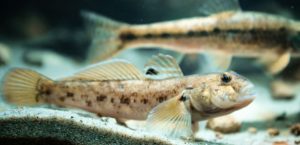
First found in the St. Clair River in Michigan in 1990, the round goby (Neogobius melanostomus) took five years to colonize all five Great Lakes. With the highly invasive fish making its way towards the Lake Champlain basin, a multi-agency effort is coordinating to stop the spread of this aggressive – and ecologically disruptive –…
-

Animated Website Aims at Reducing Phosphorus Pollution in Lake Champlain
The Lake Champlain Basin Program (LCBP) recently launched a website dedicated to simplifying the lake’s phosphorus reduction plan. The site — Clean Water Commitment — takes a unique approach to educating the public on how they can be of assistance. “We wanted the website to be fun and light in order to engage people who…
-
Achieving Water Quality Standards Through Collaboration and Problem-Solving
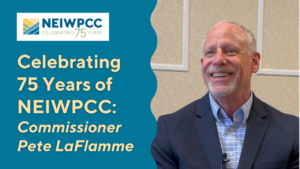
NEIWPCC Commissioner Pete LaFlamme Shares His Perspectives From protecting Lake Champlain to managing biosolids: In this new video, commissioner Pete LaFlamme praises NEIWPCC staff for their collaborative efforts across the Northeast region to improve water quality. LaFlamme, director of the Watershed Management Division at the Vermont Department of Environmental Conservation, speaks of the many invaluable…