
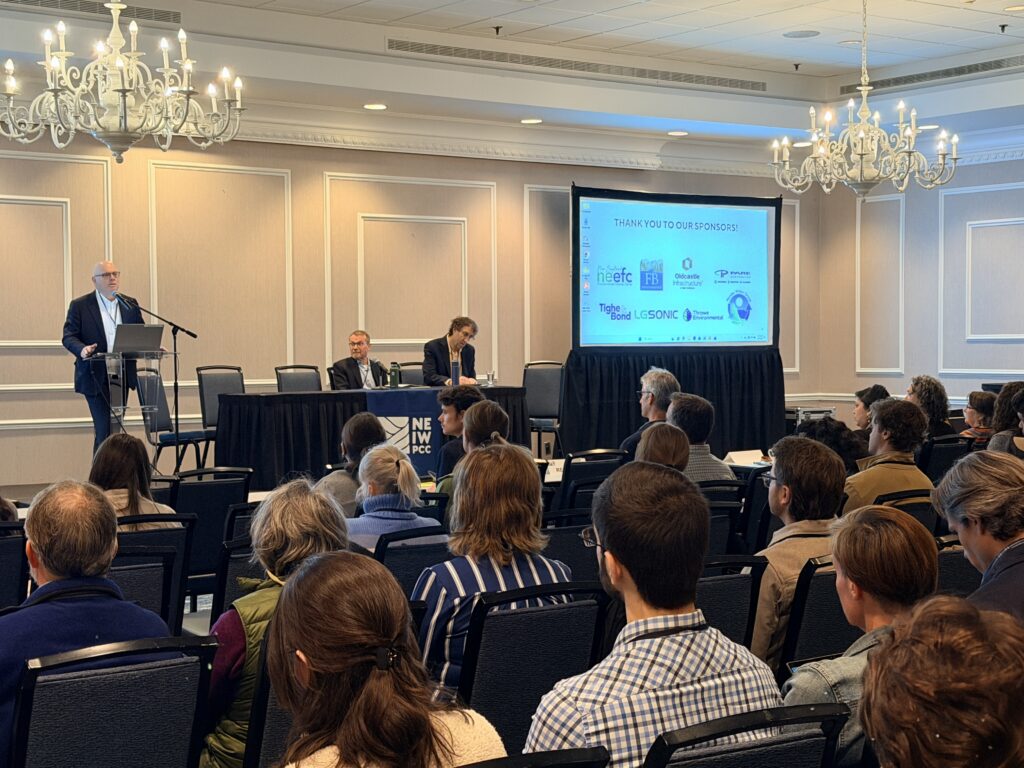
For more than three decades, NEIWPCC’s Annual Nonpoint Source Conference has served as a forum for dialogue around nonpoint source pollution work and projects in the Northeast. This year’s event welcomed more than 175 watershed professionals and students from across the region to the coastal town of Plymouth, Massachusetts, where nonpoint source pollution is a constant threat to the health of local fresh and saltwater ecosystems.
Plymouth is located on Cape Cod Bay, which is prone to excess nitrogen from improperly maintained septic systems and runoff pollution. These conditions peak in the summer months due to an influx of tourists to Cape Cod, where around 85% of homes are serviced by septic systems, according to Woods Hole Oceanographic Institution.
Unlike point source pollution, which includes outputs from factories and wastewater treatment facilities that release directly into waterways, nonpoint source pollution is more difficult to trace. It originates from a variety of different sources and discharges indirectly into the water, accumulating contaminants from the ground, soil, and air on the way. While this makes it more difficult to regulate and control, nonpoint source pollution (which includes septic systems) is the leading remaining cause of water quality problems, according to the Environmental Protection Agency (EPA).
To kick off the conference, Brian Harrington, who is the Deputy Regional Director of the Southeast Regional Office with the Massachusetts Department of Environmental Protection (MassDEP) addressed recent efforts to remove excess nitrogen from coastal waters in the state through septic system restoration. Attendees also heard opening remarks by Ken Moraff, water division director with U.S. EPA Region I, and NEIWPCC Commissioner Steve McCurdy, who is the North Region Fiscal Services Lead at Woodard and Curran, who discussed the importance of nonpoint source work.
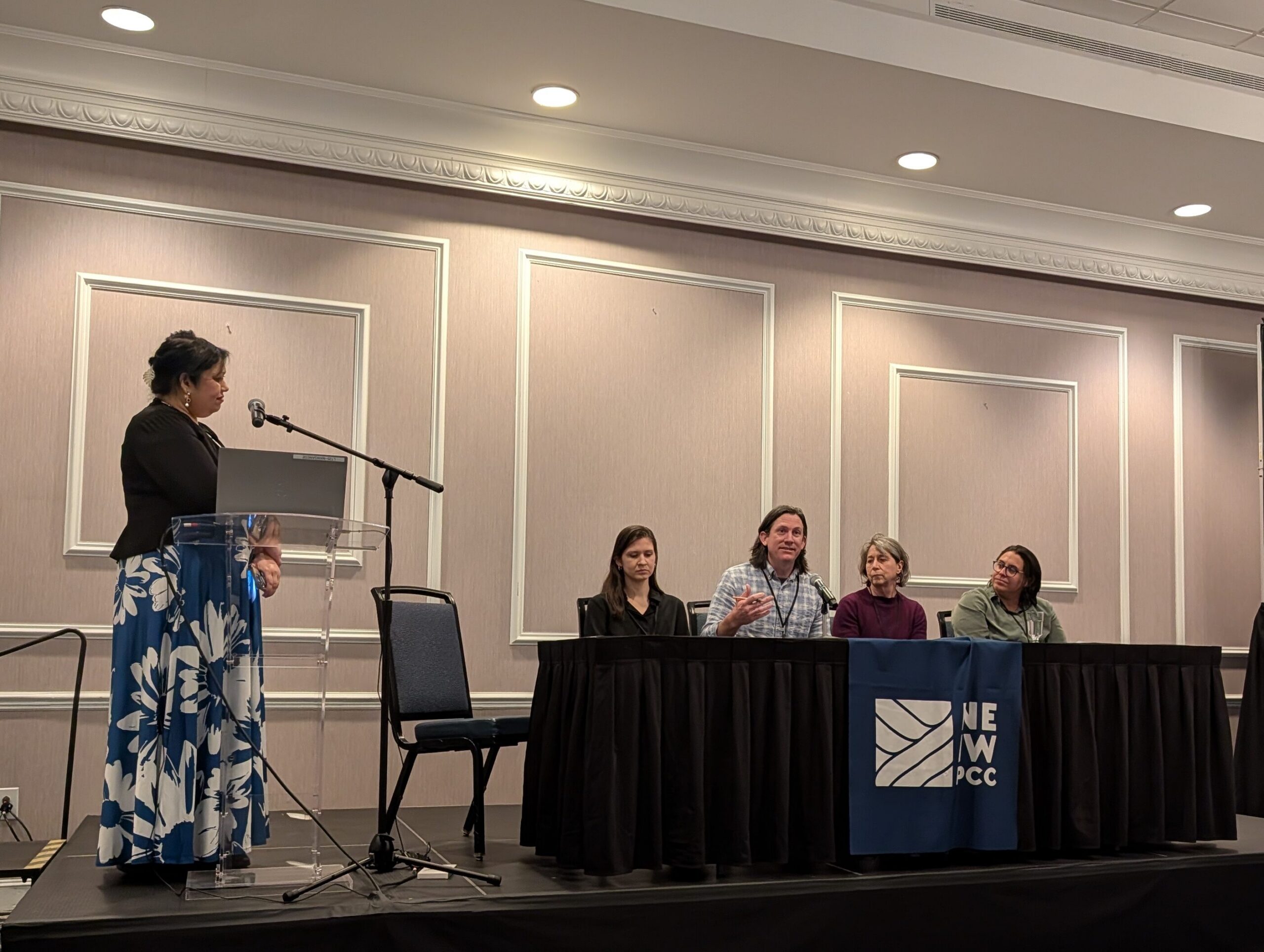
A panel session, featuring regional nonpoint source coordinators from Massachusetts, discussed how to engage with communities while working on pollution prevention projects. Iain Ward, CEO and founder of New England Consulting Services, Inc, asked the audience “What does community mean to you?” Participants gave a variety of answers, including: mutual benefits, a place where someone feels safe, having similarities, and sharing resources. Ward diligently echoed each response back to the audience.
“Do you see what I am doing here?” he asked. “By repeating your answers, I am demonstrating active listening and building rapport with this group.” This, according to Ward, is one of the ways water professionals can build relationships and trust with community members.
Alison Dixon, a senior planner for the Environment and Energy Program with the Berkshire Regional Planning Commission, agreed that visiting communities and speaking with homeowners is the best way to build connections. “Anytime you have the chance to step out of your office, that is going to move the needle in helping communities implement these projects and get involved.”
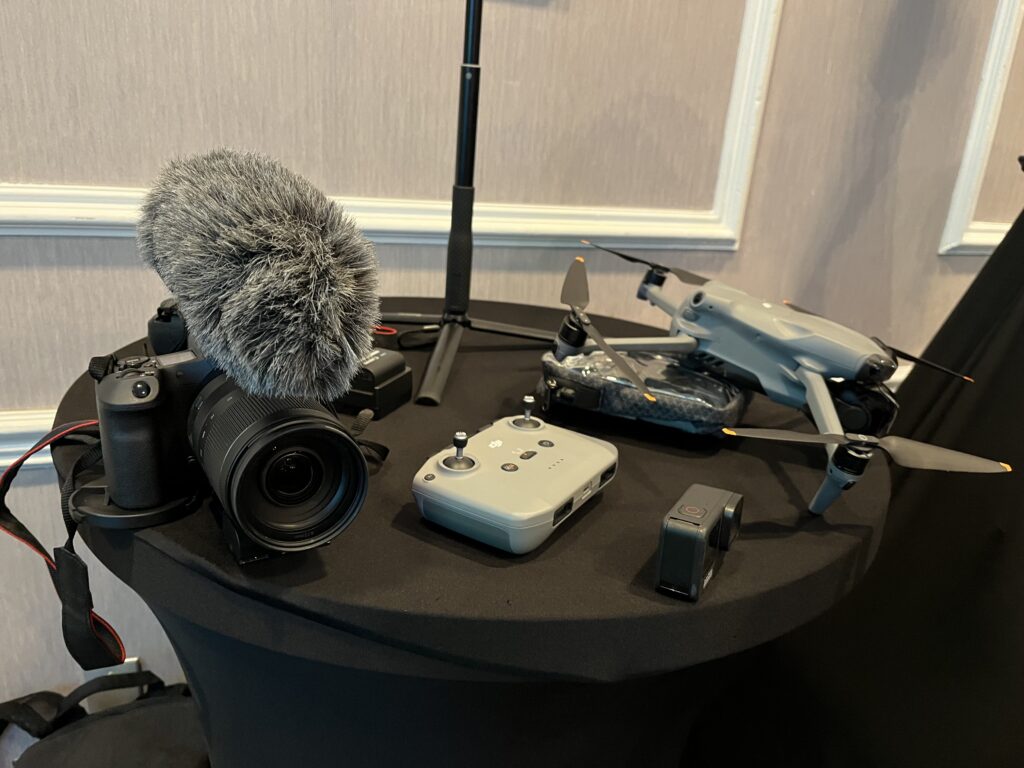
The conference continued with breakout sessions organized by common interests including chloride contamination, generating funding for projects, new tools and technology, and agricultural pollution. One presentation homed in on how to communicate success stories to build community support. Led by Asa Eslocker, a former Emmy Award-winning journalist for ABC News who now works as a technical leader for Weston and Sampson, the session detailed the process of creating a 4-minute-long video documenting nature-based stormwater solutions in Elizabeth City, North Carolina. The footage highlighted a community rain garden project led by local youth from the Boys and Girls Club. He then walked the audience through how they can use the same type of storytelling for their own success stories.
“You do not need a Hollywood camera for this type of thing,” said Eslocker.
In another session, representatives from X-Cel Education described their conservation corps program, which prepares youth in Greater Boston for careers in water management and conservation that lead to economic self-sufficiency. Each year, three cohorts of students participate in paid internships in the water management field, a variety of conservation projects, and workforce development. At the end of the program, students are given the opportunity to take the Massachusetts Grade 3M wastewater operator license exam, and those who pass are given individualized job placement assistance. X-Cel Education also eliminates transportation barriers that could prevent participants from taking certain jobs by assisting with obtaining a driver’s license and purchasing vehicles.
The conference also featured a poster session where practitioners shared creative approaches to advancing water quality throughout the region. Poster topics included green stormwater infrastructure, the role of beavers in habitat restoration, community engagement strategies, and case studies on vegetated buffer performance and microplastics in rain gardens.
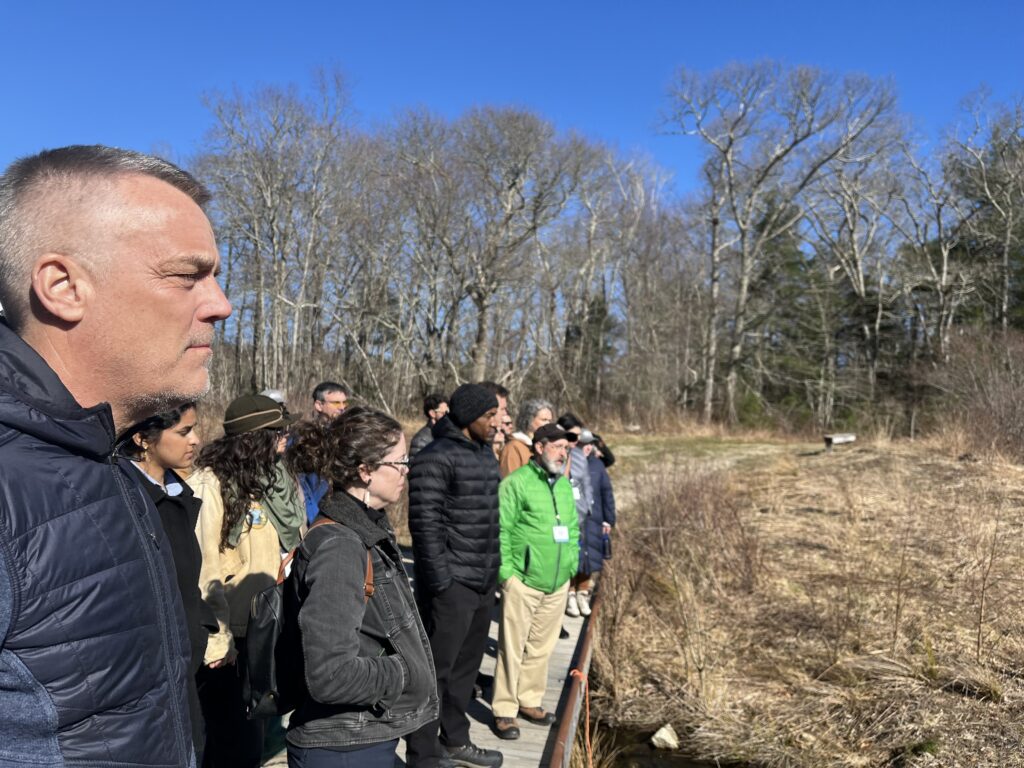
Attendees had the opportunity to visit two former commercial cranberry bogs that had been restored, one at Mass Audubon’s Tidmarsh Wildlife Sanctuary and the other at Plymouth’s Eel River Preserve. The field trip was guided and supported by representatives of Massachusetts Fish and Game, the town of Plymouth, Massachusetts Audubon, and Living Observatory. The group viewed the sites of dam removals, learned about restoration efforts, and heard about nature-based solutions that were implemented.
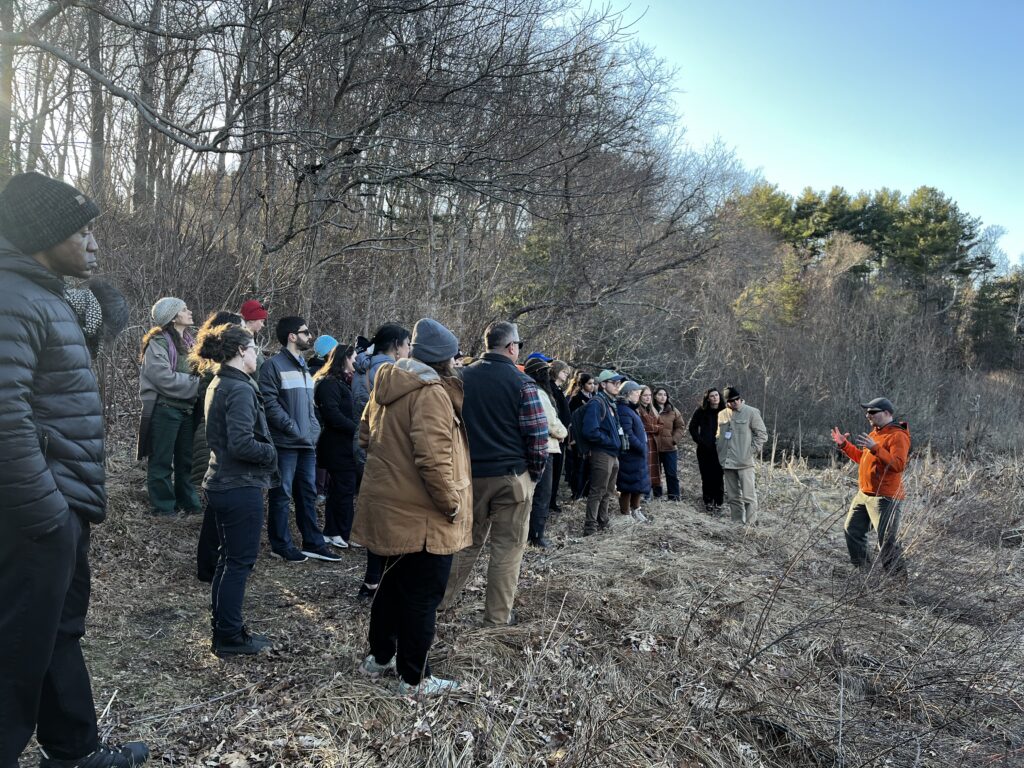
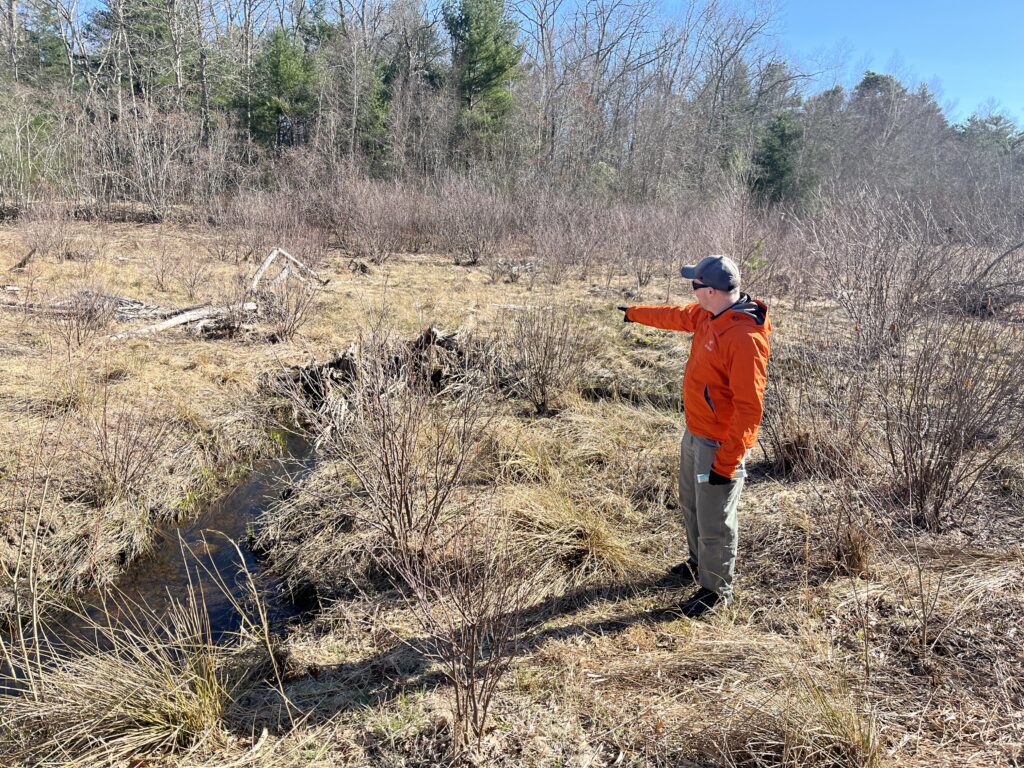
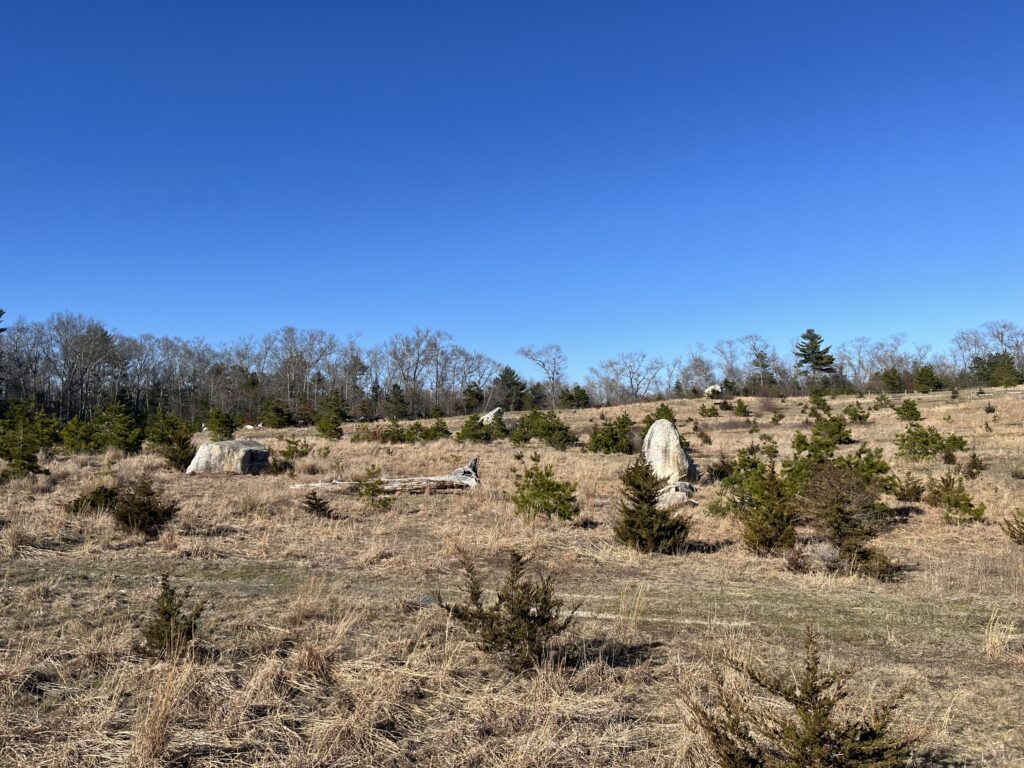
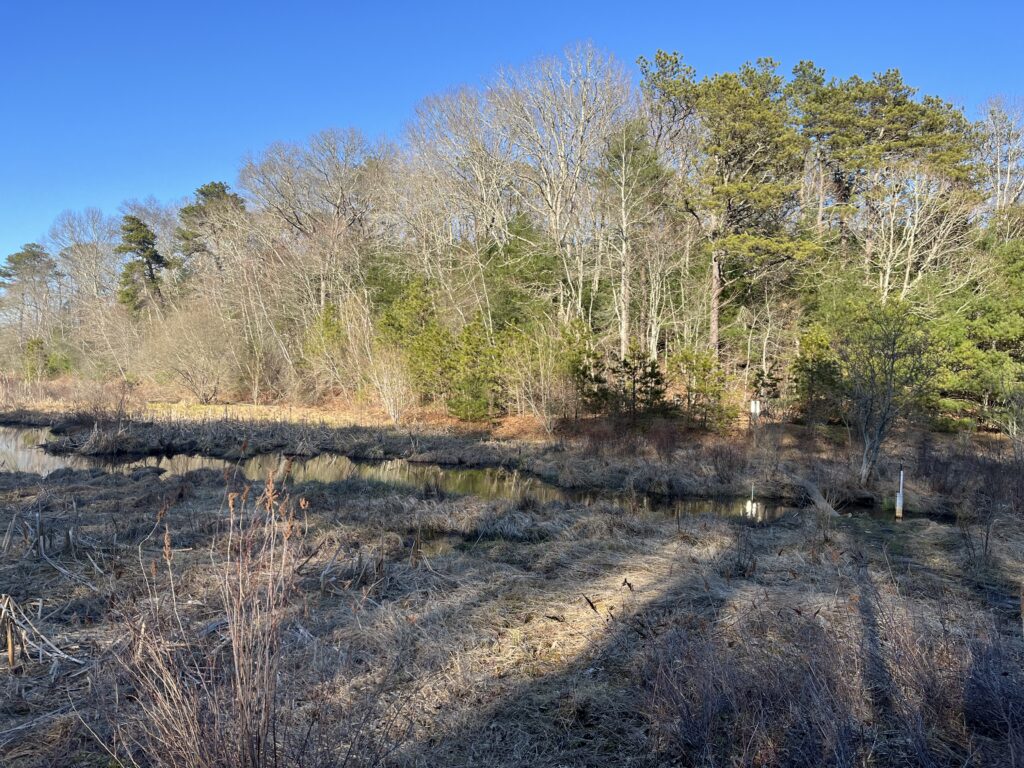
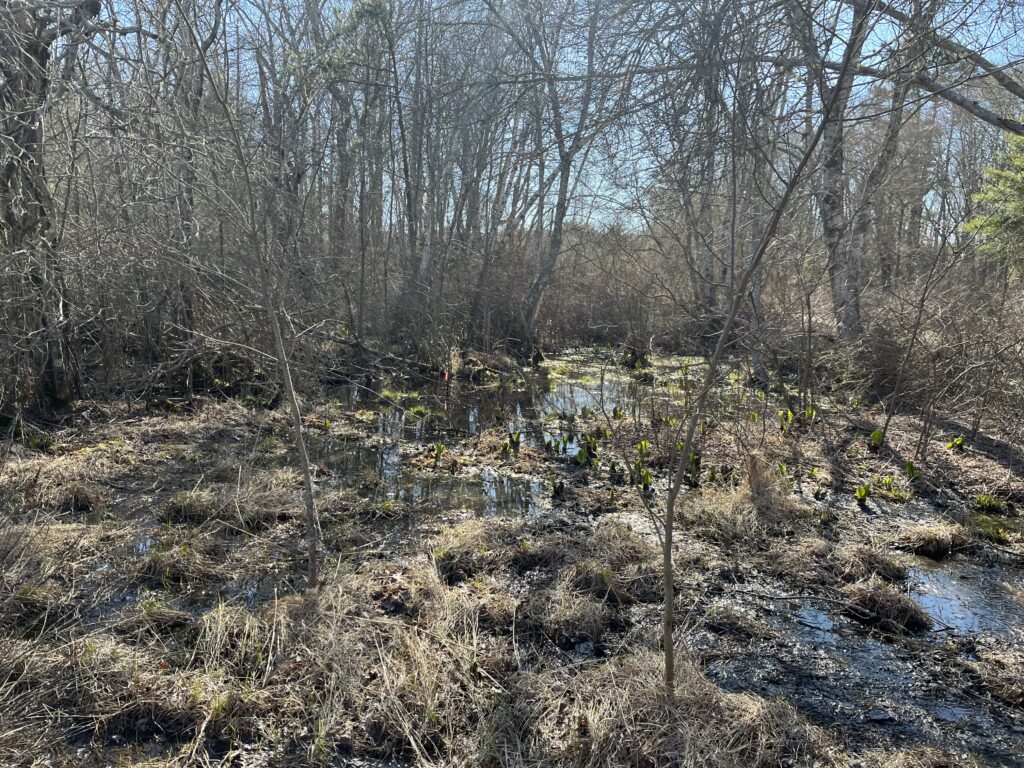
During the site visit, David Gould, director of marine and environmental affairs in Plymouth, recounted a story about an issue he faced during the restoration process. To protect newly planted Atlantic white cedar trees at Eel River Preserve, staff implemented a fence to keep deer away from the saplings. But he found himself discouraged when he returned each day to find that coyotes had managed to dig their way under the fence. Gould worried those holes could threaten the stability of the fence and repetitively filled them each time they appeared.
But soon, the trees had another problem. Voles, who are excellent burrowers and can easily get under fencing, were also preying on the young trees. Gould was almost out of ideas when he came upon an incredible scene one morning on his way to fill in the holes: a coyote crawling out from under the fence with a vole in its mouth. That is when he realized that, while he was spending time preventing coyotes from entering, he was also eliminating one of the vole’s best natural predators. He immediately stopped filling the holes and noticed improvements in the sapling’s survival rates. This was a win-win situation for him: less work for him and a better outcome for the trees and the larger ecosystem.
The Annual Nonpoint Source Conference was sponsored by Horsley Witten Group, Inc., New England Environmental Finance Center, Throwe Environmental, FB Environmental Associates, LG Sonic, Pare Corporation, Tighe and Bond, and Oldcastle Infrastructure. Planning for the event was coordinated by NEIWPCC staff in partnership with MassDEP and U.S. EPA Region 1.