
NEIWPCC has released a new resource, “Managing Water Chestnut: A Decision Framework and Implementation Guide for Communities,” which focuses on habitat restoration efforts in two interstate watersheds located in Massachusetts and Rhode Island. Funded by a watershed implementation grant through the Southeast New England Program (SNEP), the guide is the culmination of a multi-year project in the Blackstone and Ten Mile Watersheds.
The project empowered local communities to tackle European water chestnut in urban waterbodies through a variety of means. Water chestnut (Trapa natans) is an aquatic invasive plant that overtakes slow-moving rivers, lakes and ponds and negatively impacts freshwater ecosystems. The plants form dense floating mats that deplete dissolved oxygen levels, shade out native plants, alter fish habitat and limit recreational activities. When left unmanaged, water chestnuts can grow exponentially, and seed beds can remain viable for up to twelve years – making a sustained, multi-year management effort a necessity.

“The goal of the management guide was to bring together the collective experiences of our team, including those from organizations that were working through this for the first time, and create a roadmap for how to deal with water chestnut,” said NEIWPCC Program Manager, Maryann Dugan, who oversaw the project. “We worked with state governments, municipalities, nonprofits that have paid staff and some that are mostly volunteer-led – so everyone had a different range of capacity. We tried to make this all-encompassing guide that could be applied to other communities to learn from our experiences and cover all the bases.”
The guide aims to help municipalities, watershed organizations, community groups, lake and pond associations, and other waterbody stewards in the Northeast navigate the process of controlling this invasive plant. Specifically, it provides a step-by-step framework for identifying and assessing an infestation, selecting a management approach, planning a volunteer hand-pulling effort or herbicide treatment, and monitoring results over time.
The experiences and lessons drawn from management efforts in the grant area informed the 65-page document, including work conducted in partnership with local communities and organizations. The guide, and its companion video, are available on NEIWPCC’s website.
A Community Approach
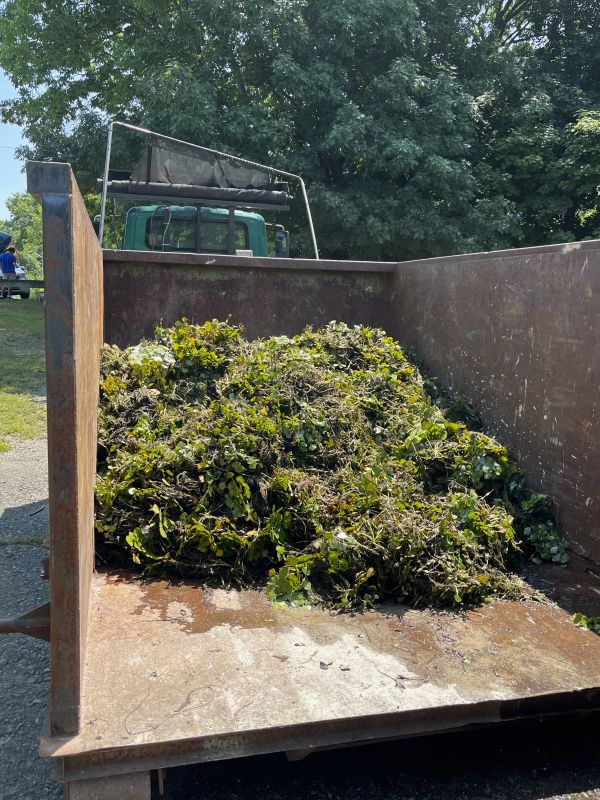
For this locally-led project to succeed, NEIWPCC solidified a host of partners interested in water chestnut management efforts. These organizations received funding to secure their project participation, which was used to purchase gloves and other equipment, rent dumpsters, and support staff time to manage removal events.
“The project was really intended to be from the ground up,” said Dugan. “We were interested in how you manage this problem [water chestnut], and how you engage all the necessary partners. It was very much a community-based effort.”
Over the course of the four-year grant, the participating groups strengthened relationships as they learned from and collaborated with each other. Dugan said the organizations plan on continuing to work together even after the grant ends.
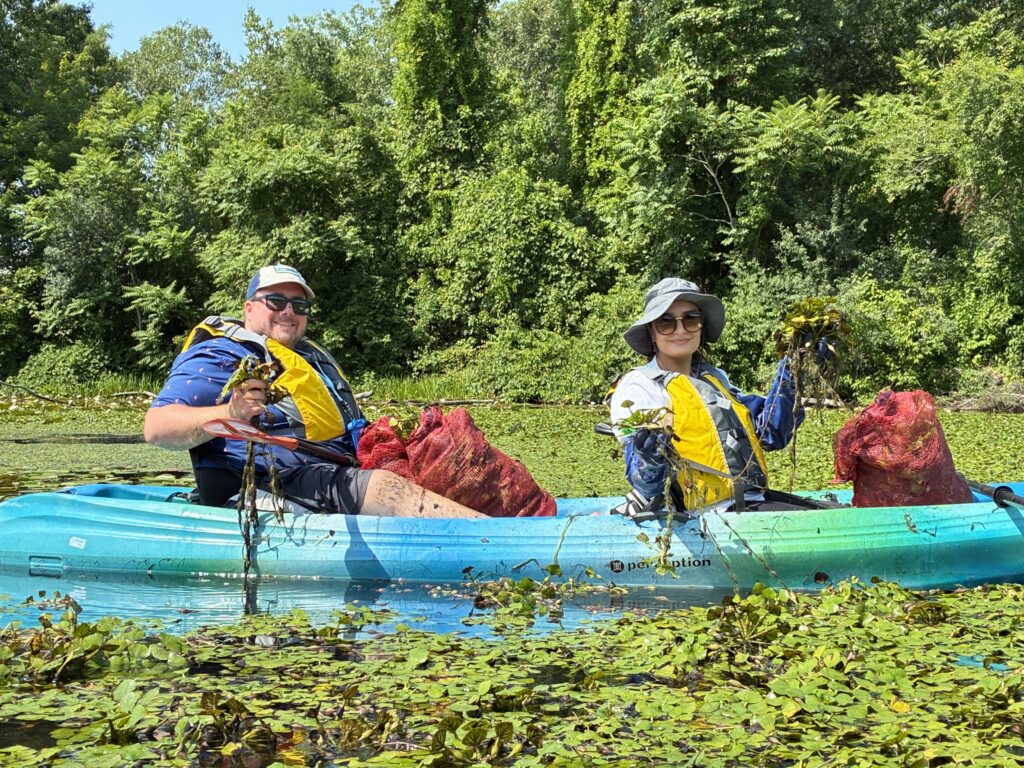
One such community group to receive financial support was the Blackstone Valley Tourism Council (BVTC), a Rhode Island-based nonprofit organization. Their work portfolio includes hands-on environmental education through the River Classroom Program, where students learn about and explore the Blackstone by boat. Amanda Mograss, social media manager and kayak manager with the BVTC, said they wove water chestnut removal efforts into this existing program, allowing the youth to not only learn about the river, but also take action to improve its health.
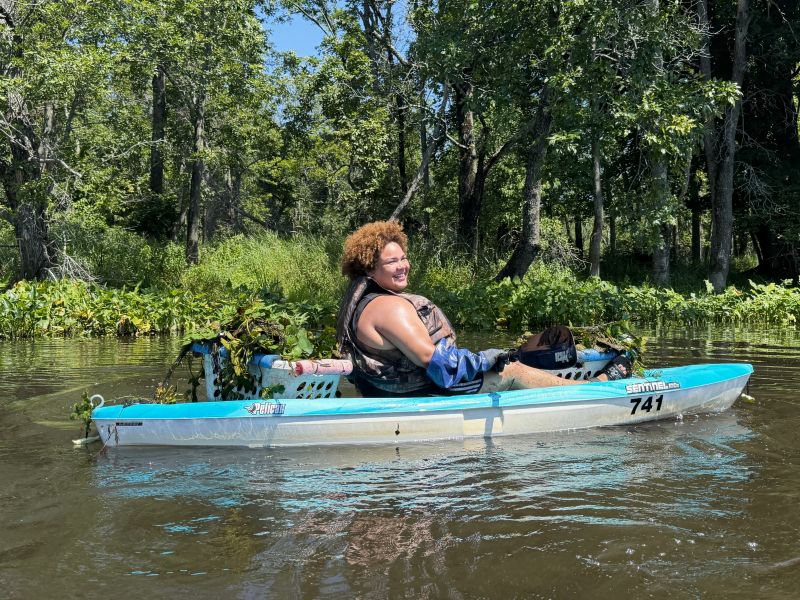
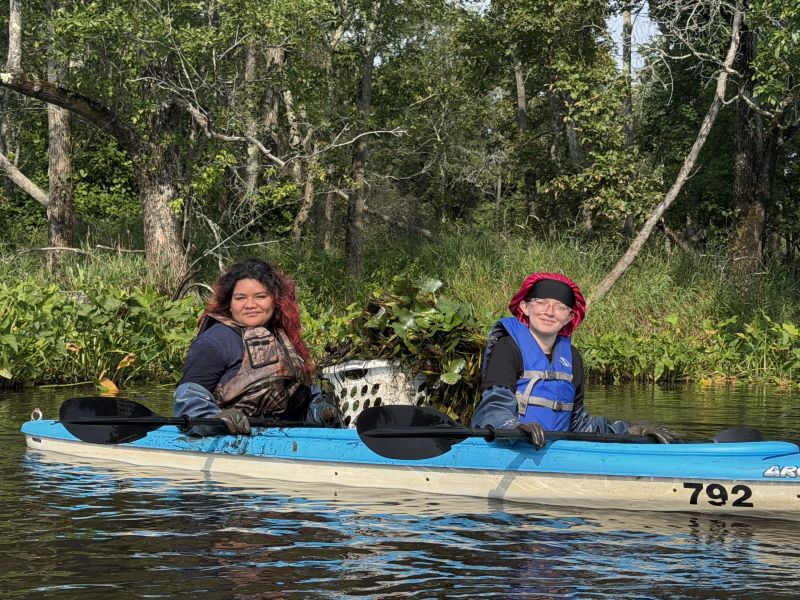
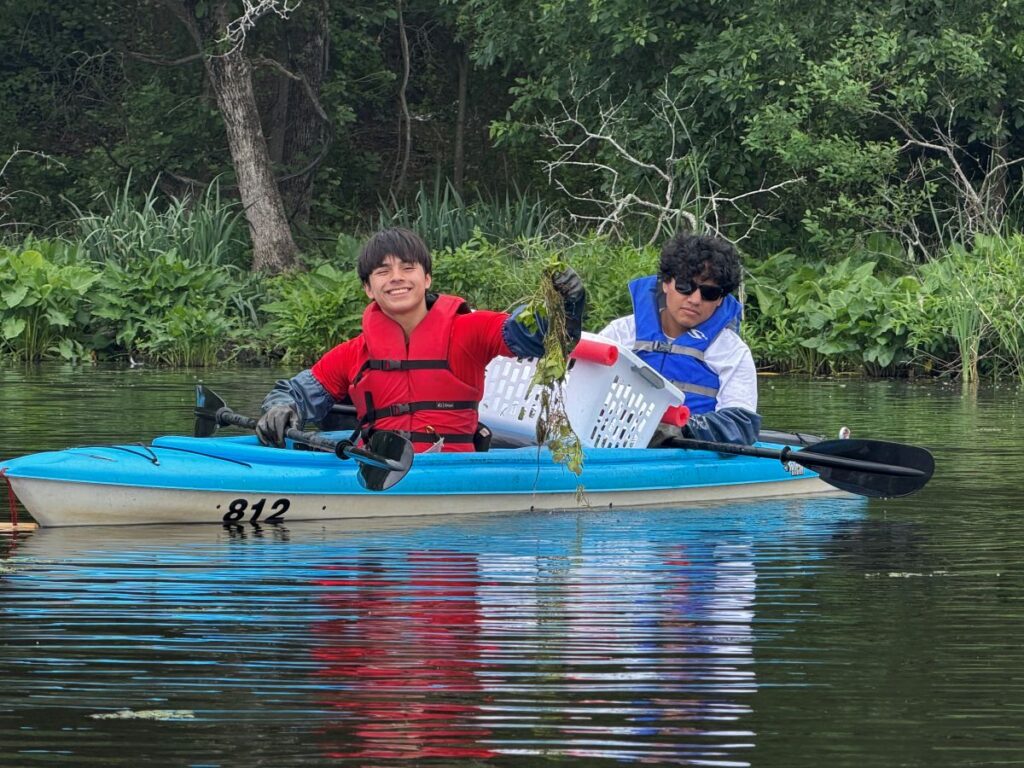
“We have kids who come in and say, “I don’t want to do this – this is gross,”” said Mograss. “But then they see the impact they’re making on the river, and those specific students have chosen to come back, year after year. So, it’s a very rewarding program, especially for the kids.”
The Council maintains a fleet of kayaks, and the grant monies were used to purchase removal gear such as gloves and laundry baskets, which are used to collect the plants.
“Some of these kids have never been on a kayak before,” said Dugan. “They get free lessons, and then they learn about plant identification and water chestnut…It builds confidence in them becoming environmental stewards.”
Mograss said that the grant facilitated increased partnerships with local teachers and community groups, such as Girl Scout troops, GroundWork Rhode Island, and Save the Bay, who all also participated in removal events. Additionally, BVTC offers river tours on their 40-passenger boat, where participants learn about the river’s rich history and now, about water chestnut management efforts as well.
“The water chestnut program is another way for us to teach people that the Blackstone is not this dirty river that some people might think of it as, because of past pollution,” said Mograss. “You can see the wildlife returning to the river and more people fishing and boating. The Blackstone is up and coming, it’s use is growing, and here’s a way to help it.”
Throughout the grant period, NEIWPCC supported dozens of community-led volunteer hand-pulling events each summer. Most recently, in 2026, 15 events drew 240 volunteers resulting in approximately 6,366 lbs. of plant material removed from the two watersheds. This management approach can successfully limit plant populations while also engaging community members. Hand-pulling events provide an opportunity for volunteers to get out on a local waterbody and increase public awareness about the impacts of aquatic invasive plants.
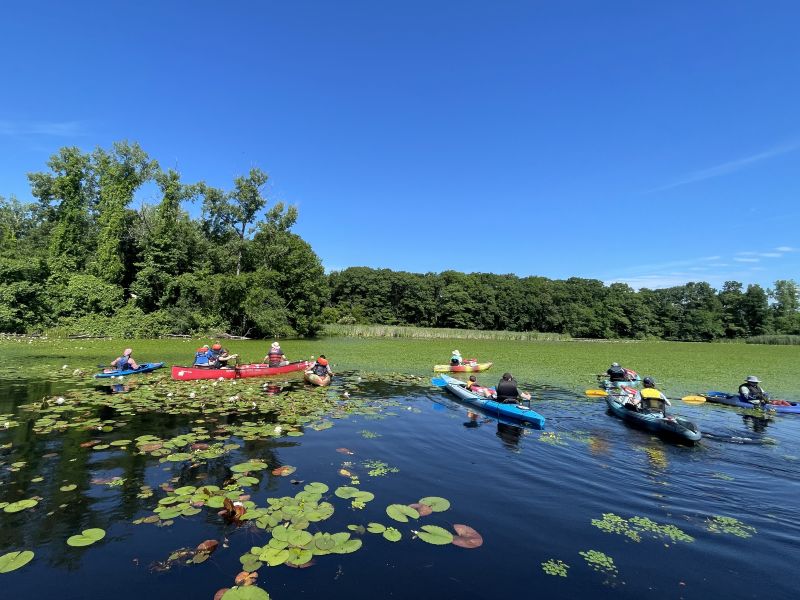
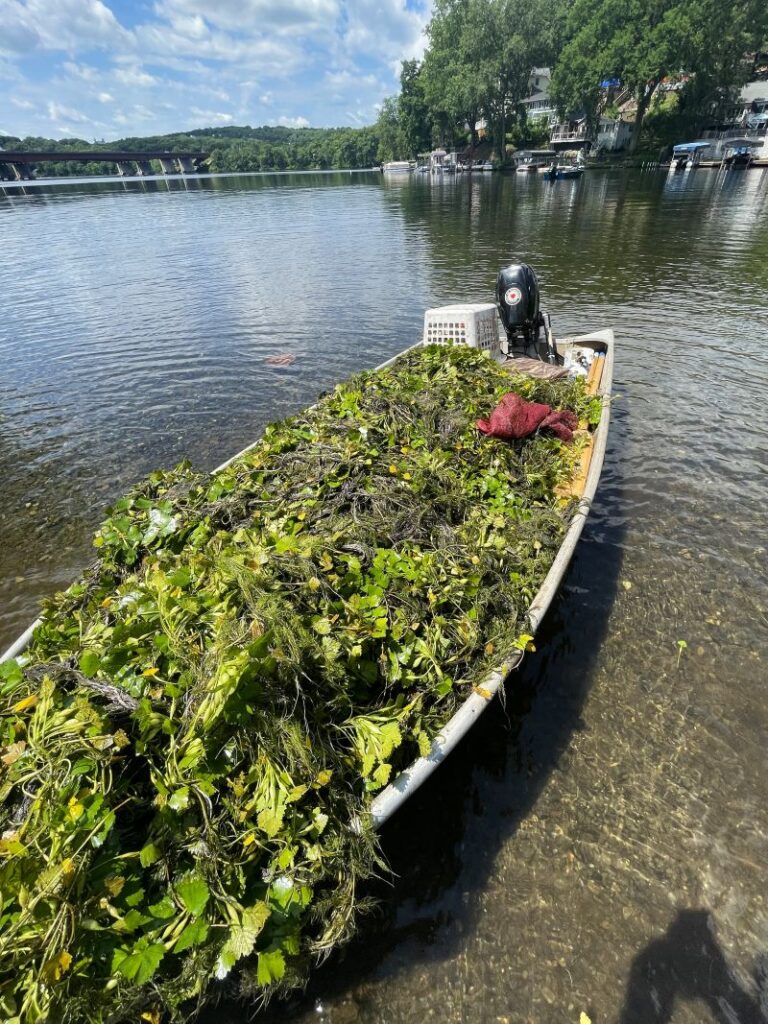
In addition to the hand-removal efforts, some communities managed infestations with herbicide treatments. For example, the city of East Providence, Rhode Island treated 63 acres of invasive water chestnut with herbicide at Central Pond, making for a dramatic result.

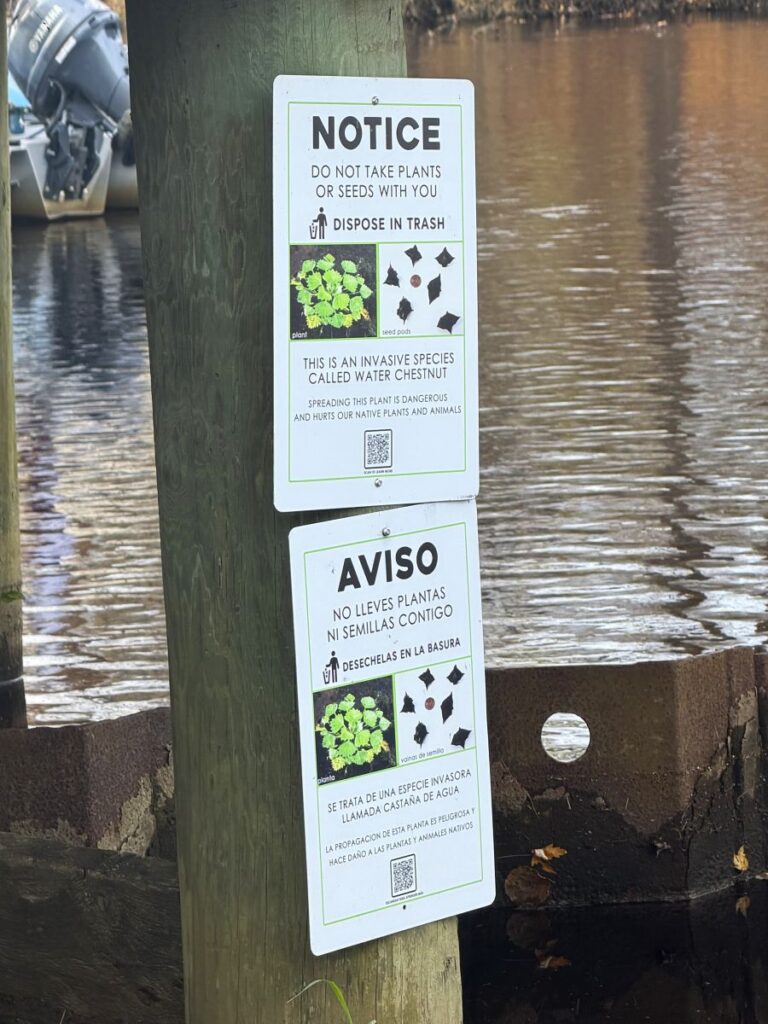
The grant also funded the development of educational materials, including a brochure, plant identification tags, flyers, and signage posted along impacted waterways in both English and Spanish.
With water chestnut seed beds remaining viable for upwards of a decade, management efforts will be an ongoing task for these communities. Now, however, they are armed with a detailed management guide, a variety of educational materials, expanded community partnerships, and years of experience to help guide their future efforts.
“The ultimate goal of the grant was achieved because we have so many organizations that care about the problem,” said Dugan. “Providing this roadmap of how to deal with water chestnut will make it easier to bring other communities into the issue. Even the individual homeowner on a waterbody will be able to see this is a problem that isn’t insurmountable.”
This project and associated deliverables were supported by a SNEP Watershed Implementation Grant, which are funded by the U.S. Environmental Protection Agency (EPA) through a collaboration with Restore America’s Estuaries (RAE).
The following organizations contributed to this project:
- Blackstone River Watershed Council (BRWC)
- Blackstone Valley Tourism Council (BVTC)
- Blackstone Watershed Collaborative (BWC)
- City of East Providence, Rhode Island
- City of Worcester, Massachusetts
- Lake Quinsigamond Watershed Association (LQWA)
- Massachusetts Department of Environmental Protection (MassDEP)
- NEIWPCC Executive Committee and Commissioners
- Rhode Island Department of Environmental Management (RIDEM)
- Town of Grafton, Massachusetts