
Water professionals from across the country convened in Washington, D.C. for Water Week 2026, an annual event featuring presentations, networking events, policy briefings, and meetings surrounding water sector challenges. A pillar of the event, the two-day National Water Policy Fly-In focuses on federal policy and meetings on Capitol Hill, where attendees can engage directly with congressional offices and federal agencies.
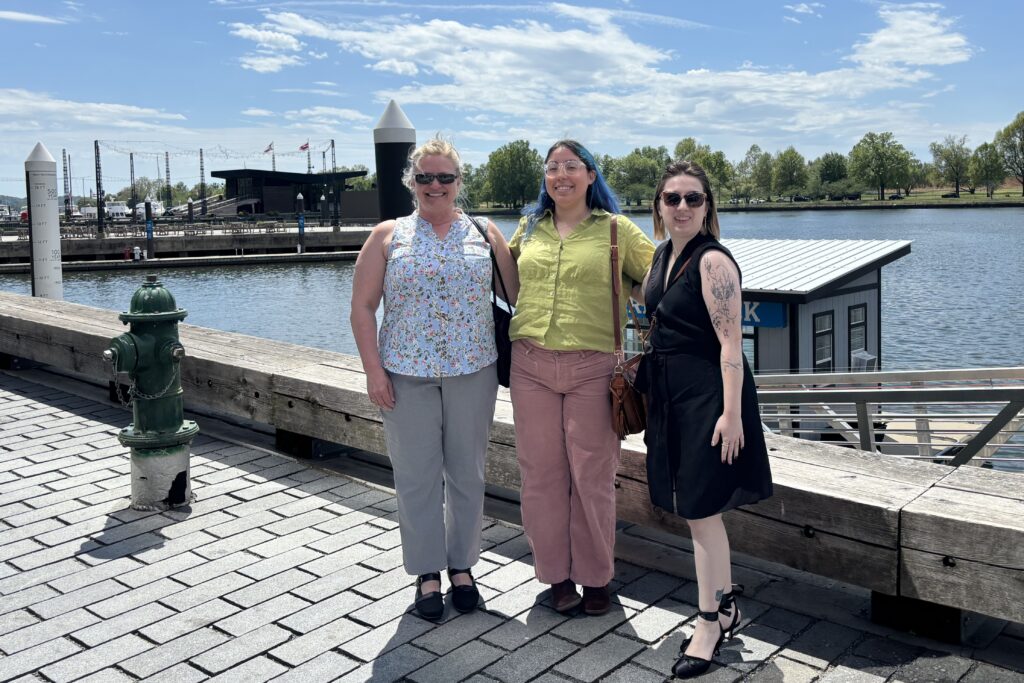
This year, NEIWPCC sent representatives Josie Fazio, environmental engineer, and Beth Malcolm and Daphne Short, both environmental analysts, to the Water Policy Fly-In. Short also represented the Massachusetts Water Environment Association (MAWEA) as a member of the board of directors.
“While at the National Water Policy Fly-In, I learned about key concerns facing water infrastructure, and how these issues could be addressed on the federal level,” said Fazio, a member of NEIWPCC’s Wastewater and Onsite Programs Division. “We spoke a lot about water use from AI, the circular water economy, and ways to strengthen and develop the clean water workforce.”
The fly-in is jointly organized by the Water Environment Federation, National Association of Clean Water Agencies, Association of Metropolitan Water Agencies, The Water Research Foundation, and WaterReuse Association. More than 650 professionals participated in the event to help advance shared priorities. The top-level funding and policy requests included providing affordable water services; investing in water research for innovative solutions; supporting resilience to threats such as drought, flooding and cyber-attacks; and advancing regulatory flexibility and reform.
During the event, attendees heard from senior leadership at the U.S. EPA about water priorities and federal policy, such as workforce needs and PFAS initiatives. Jessica Kramer, assistant administrator of the U.S. EPA’s Office of Water spoke during the plenary session. She highlighted available grant funding for technical assistance targeting small drinking water and wastewater systems, as well as the release of the Water Reuse Action Plan 2.0, a national framework for advancing water reuse.
A panel presentation centered on federal, local, and industry perspectives of data centers and AI. The panelists suggested utilities get involved with discussions around potential data centers early on and identify their community’s priority needs for the decision-making process. They also discussed water recycling, rate structures to offset costs, and other community considerations such as incorporating infrastructure resiliency and reliability.
The second day of the fly-in offered the opportunity to meet directly with members of Congress and their staff. During the meetings, water professionals educated representatives on current legislation that is being voted on in Congress.
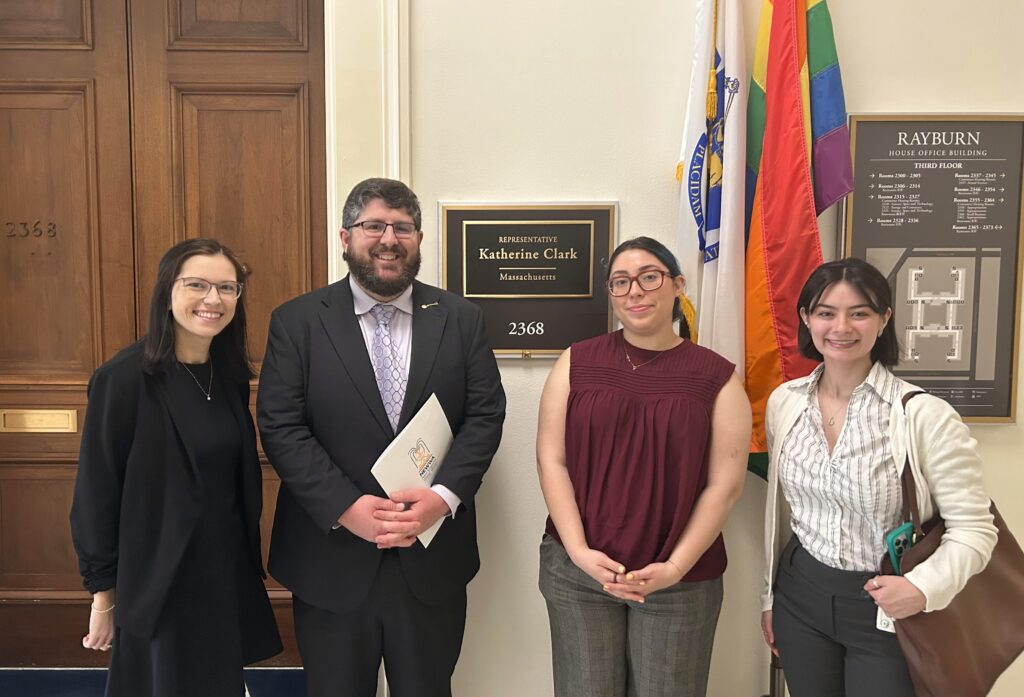
Short attended Massachusetts legislative meetings alongside members from MAWEA, Massachusetts Water Works Association, Massachusetts Coalition for Water Resources Stewardship, and with regional partners New England Water Environment Association, New England Water Works Association, and the New England section of the American Water Works Association. Together, they met with the offices of Representatives Lori Trahan, Katherine Clark, and James McGovern.
“The National Water Policy Fly-In sets the stage for water professionals to engage their representatives in critical issues across the water industry,” said Short. “At the top of the Massachusetts priority list, we communicated issues related to State Revolving Fund funding and infrastructure, PFAS costs and liability, workforce development, and wipes impacting collection systems.”
NEIWPCC coordinates Massachusetts wastewater operator certification and renewals, so Short spoke to the representatives about declining operator license renewal trends, an aging workforce, and the need for workforce development programs targeting veterans, women, and underrepresented groups.
Meanwhile, Fazio met with Maine Senators Susan Collins and Angus King, and Representative Jared Golden, where they discussed outdated infrastructure, funding, and biosolids.
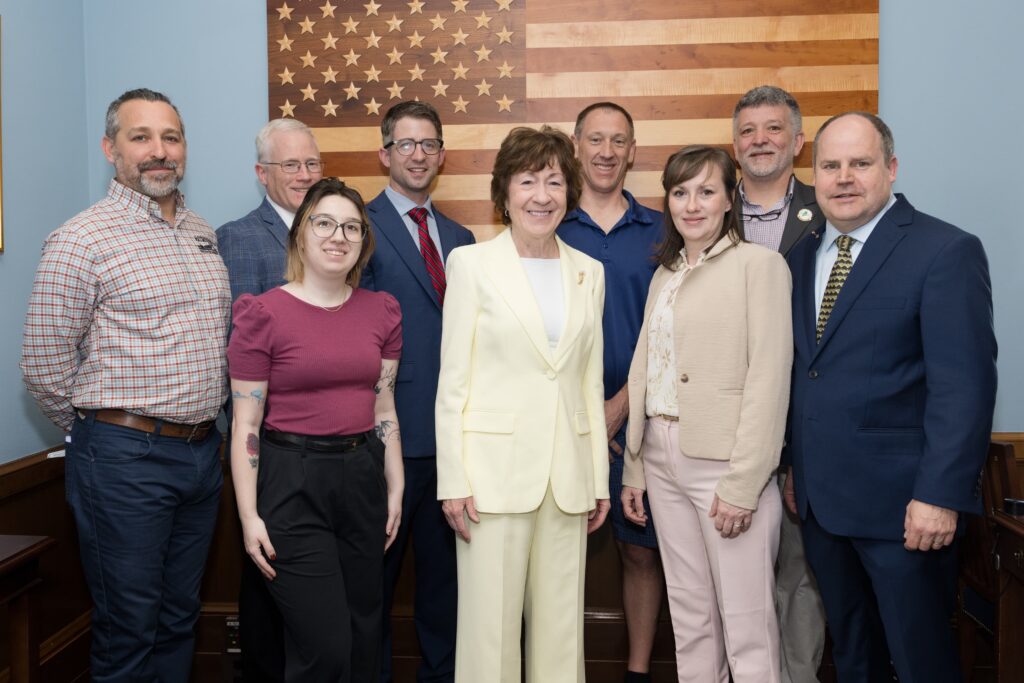
“The main talking points included supporting the WIPPES Act [S. 1092 and H.R. 2269], which would require “flushable” wipes to be properly labeled as unsafe for sewer systems,” said Fazio, “and addressing PFAS concerns at the source instead of holding wastewater treatment facilities accountable. We also spoke about general support for water infrastructure funding, innovation, and reform.”
Support for PFAS treatment and disposal bills H.R. 6668 and H.R. 8027 were also a talking point. These bills propose setting enforceable PFAS water quality standards under the Clean Water Act; establishing federal funding for PFAS treatment at wastewater treatment facilities; and developing a national strategy for biosolids management.
“It was my first time attending this event,” said Malcolm. “I was impressed by the sheer number of organizations and attendees from across the nation’s water industry who helped carry our collective message to decision makers in D.C.”