
Imagine turning on your faucet and nothing coming out: No water for drinking, cooking, bathing or running household appliances. This is what hundreds of New Hampshire residents experienced in the fall of 2025. The culprit: their private wells went dry due to low groundwater levels.
A long-term drought precipitated the decline in groundwater, wreaking havoc on drinking water wells across the state. In a remarkable change in weather, the wettest spring on record — where it rained for 14 consecutive weekends — transitioned to the driest summer in 131 years of records. By the fall, the entire state was experiencing drought conditions with more than half in extreme drought.
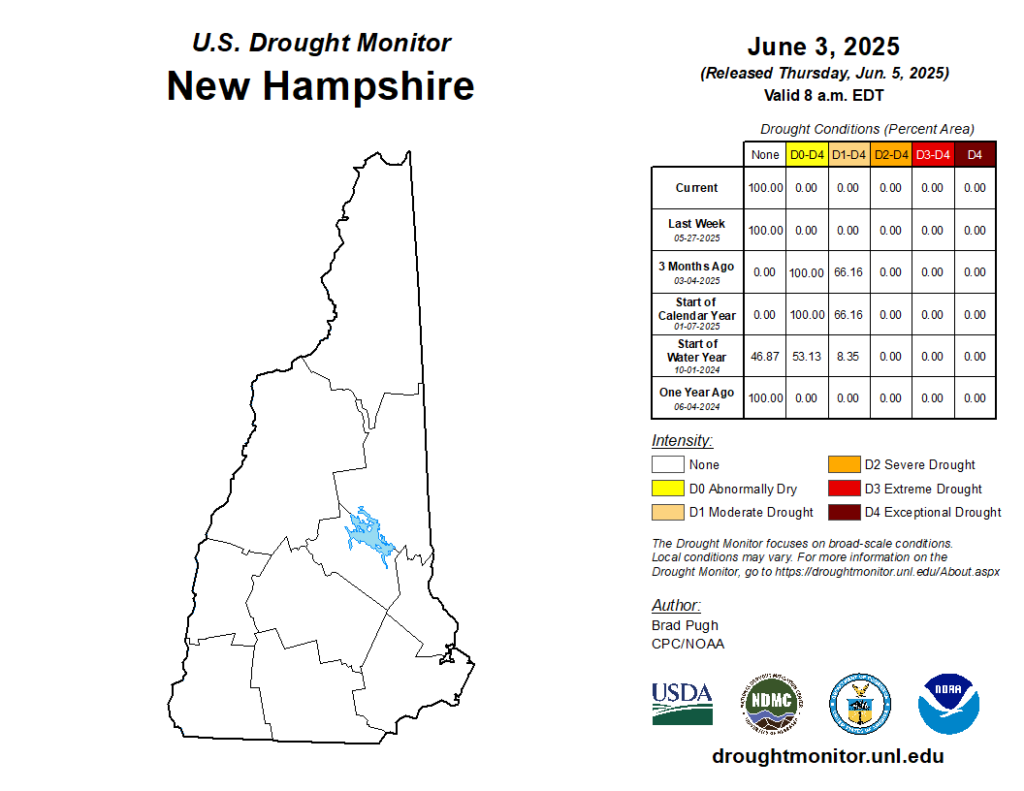
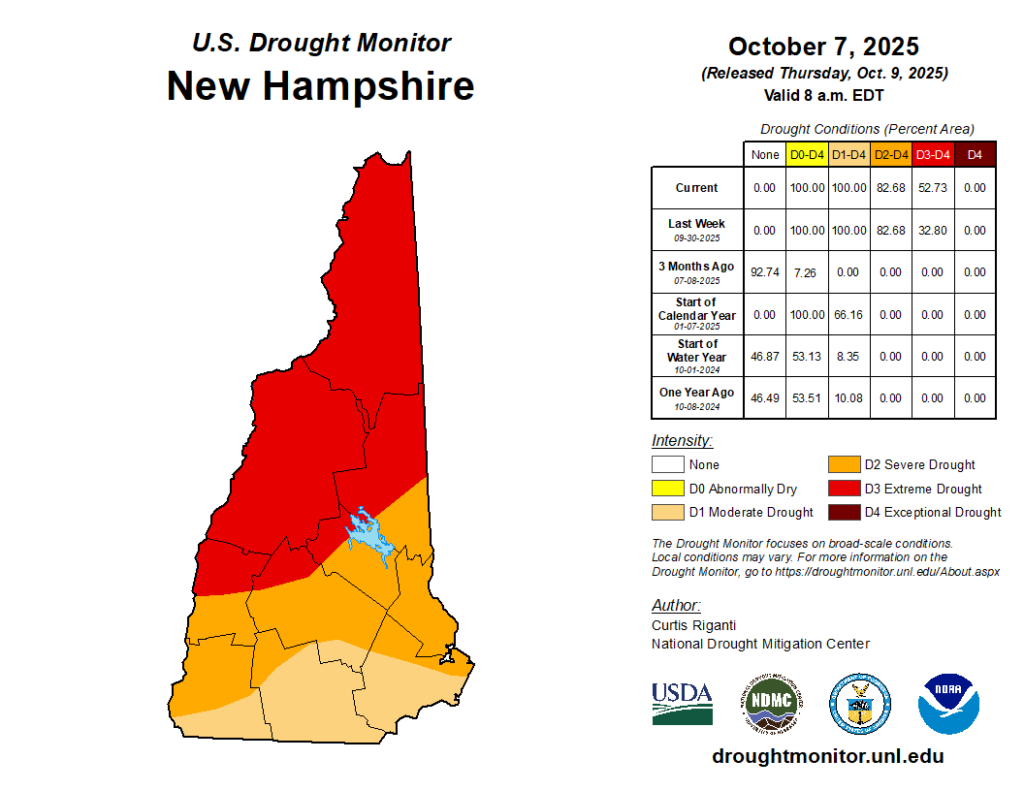
The June 3, 2025, U.S. Drought Monitor map for New Hampshire indicated no drought, but by early October the entire state showed drought conditions with the central and northern areas in severe and extreme drought. Source: U.S. Drought Monitor. Click to expand.
“Over the period of a few months, we found out that 200 wells went dry,” said Ted Diers, assistant director of the Water Division with the New Hampshire Department of Environmental Services (NHDES). “We think this is the tip of the iceberg — that there are probably well over 1,000 wells that went dry.”
NHDES collects drinking water well information from residents and well and pump contractors, who are often the first phone call a homeowner makes upon discovering a faulty or dry well. With approximately half of New Hampshire residents getting their water from a private well, drought is a serious concern for the state. Low precipitation can lead to poor water quality, an unreliable supply and even total well failure.
Not All Drought is Created Equal
The U.S. Drought Monitor (USDM) categorizes an area’s intensity on a scale of one to four. These categories are assigned weekly by USDM authors who analyze and weave together data from a variety of sources and indices across different times scales. These factors include precipitation deficits, streamflow, groundwater and reservoir levels, snowpack, temperature and evaporative demand, soil moisture, and vegetation health. They may also reference local reports about drought impact and collaborate with experts and federal and state agencies, like NHDES, to develop the map.
Using this information, the USDM author then determines where the conditions would rank historically by using a percentile range. For example, when looking at 100 years of precipitation data, the most severe drought category, D4, corresponds to the lowest two precipitation values. This “exceptional level” drought is expected to occur once or twice within a 100‐year period. The Monitor also includes areas with either abnormally dry conditions (D0) that could be approaching or recovering from drought; or with none at all.
A rapid intensification, like that seen in New Hampshire in 2025, produces a flash drought. This was caused by a combination of unusually low precipitation, high temperatures, wind and radiation. These weather conditions increased evapotranspiration rates — when water from soil, vegetation and water bodies is transferred to the atmosphere — and lower soil moisture.
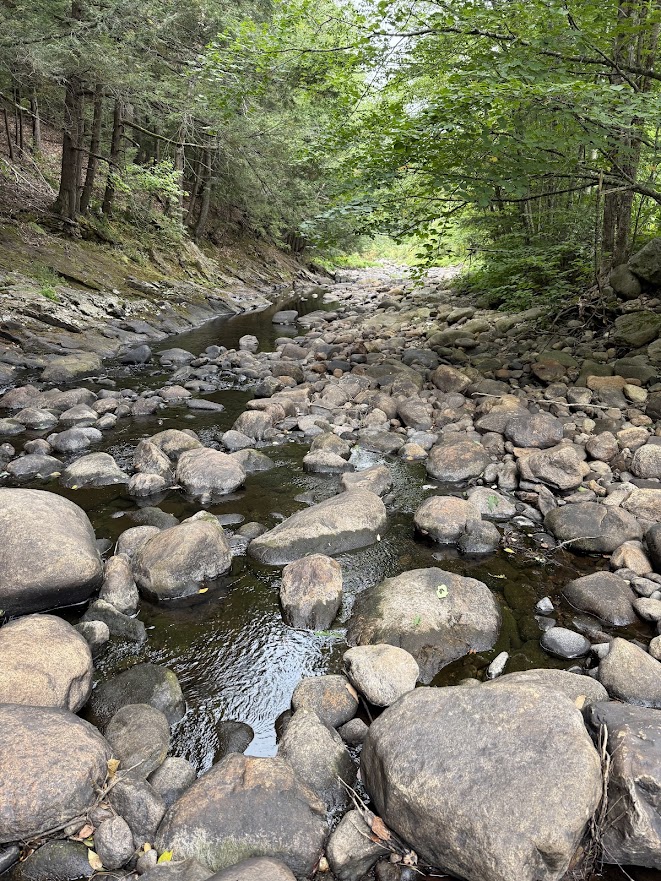
In the case of the Granite State, vegetation was booming from the wet spring. Then came the 10th warmest summer ever recorded. These hot, dry conditions caused evapotranspiration rates to soar, further drying out the soil.
Diminished Groundwater Supplies
To capture the status of groundwater levels across the state, a monitoring network collects year-round data at 48 wells. Measurements are collected hourly by sensors installed in the well, or for the seven wells without a data logger, monthly by hand. The past six months of data shows the ongoing drought conditions; up until mid-March more than 75% of the assessed wells were below normal levels.
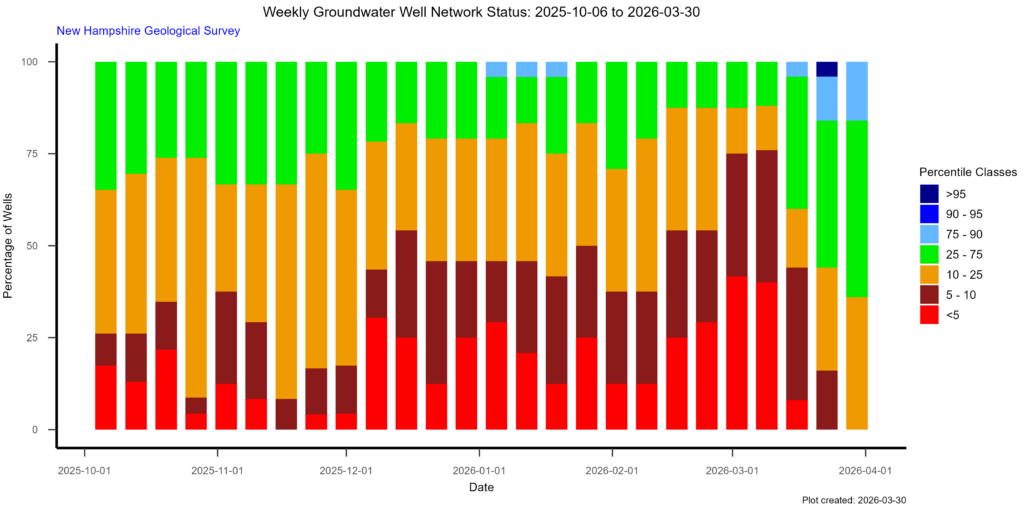
Dier, who also serves as the state’s drought coordinator and leads the Drought Management Task Force, explained that because winter began with already low groundwater levels, those conditions were “locked in” because the frozen ground can’t absorb water.
Despite the snowmelt, Diers adds, “Over the winter, groundwater levels continued to drop, which is not good news. We’re going into spring with a pretty rough antecedent condition.”
Enter the Emergency Drought Assistance Program
New Hampshire’s ongoing drought conditions and widespread reports of homeowners with dry wells led to the re-establishment of the Emergency Drought Assistance Program (EDAP). Funded by a $1.5 million grant from the Drinking Water and Groundwater Trust Fund, the program launched in January 2026. This is the third activation of the program since 2020, and Diers anticipates it being fully allocated by the summer.
This state-run initiative provides financial assistance to low-income homeowners whose drinking water wells have been compromised by drought. The program covers costs to increase water storage, lower the existing well pump, or deepen an existing well. Depending on the situation, the funds can also be used to install a replacement well or connect the home to an existing public water system. These upgrades are coupled with water quality sampling by an accredited laboratory to ensure drinking water standards are met. Eligible homeowners can apply to the program through an online application.
The New Hampshire geological survey maintains a dry well reports dashboard with interactive, real-time data on the number, location, type and status of the voluntarily-reported dry wells. Two-thirds of the reported dry wells are the dug shallow type — above bedrock and often found in older homes — with the northern part of the state most impacted.
“These are people who may have had water in that well for 50 years, and now they’ve got nothing,” said Diers. “…This is a tough scenario for a lot of people.”
The Ripple Effects of Drought
Damaged and dry drinking water wells aren’t the only impact of drought; the consequences are varied and far-reaching, from agriculture and soil health, to water quality and recreational opportunities. Dry conditions damage crops, disrupt the soil microbiome and result in less-absorbent soil. Under these conditions, when it does rain, the water runs off the land causing damaging erosion. Additionally, the cascading effects of prolonged dry periods, drying vegetation, and hot weather increases the risk of wildfire.
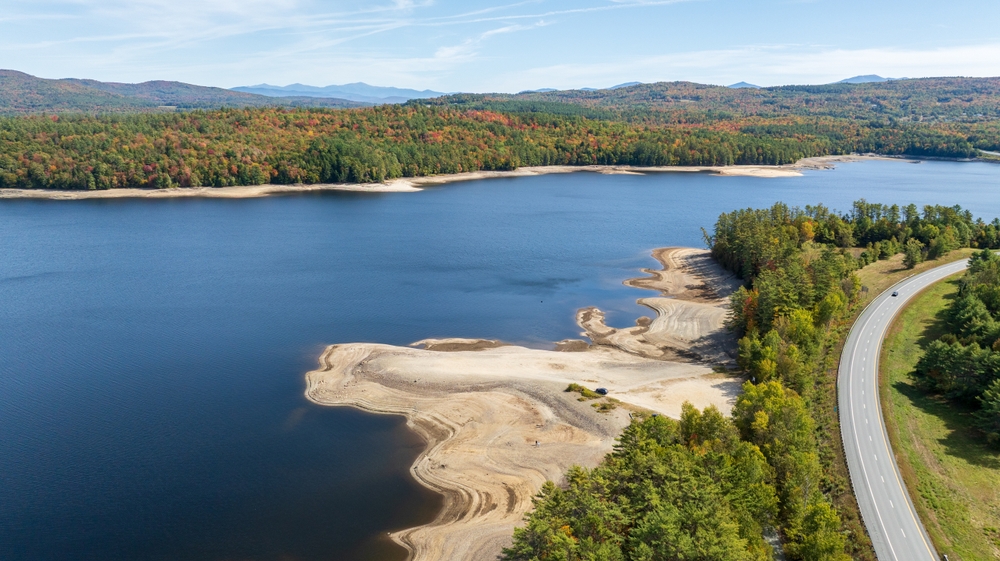
Low water levels at the river or lake can be more than an eyesore, impacting recreation, the local flora and fauna, and affecting water supply if used for irrigation. The exposed shorelines can lead to bank erosion, resulting in sedimentation of the waterbody.
“Drought results in less water entering our lakes and rivers,” said Richard Friesner, NEIWPCC director of Water Quality Programs. “In some instances, this results in fewer pollutants entering the water, but it can also increase the impact that pollution has when it does get into a waterbody. Drought conditions also usually come with higher temperatures that result in less oxygen in the water, which isn’t good for fish and other living things. This can result in fish kills and generally disrupts the ecosystem.”
Additionally, as freshwater evaporates, nutrients such as nitrogen and phosphorus can become more concentrated, fueling plant and algae growth including cyanobacteria. These poor water quality conditions are also ripe for invasive species.
With more than 1,000 lakes and ponds and 10,000 miles of rivers and streams as part of New Hampshire’s “water economy,” there’s a lot at risk. Tourism associated with boating, fishing, and swimming is a significant economic driver to the state, and reliant on healthy water levels. The University of New Hampshire’s Nature Economy Fact Sheet lists the 2017 economic impact of recreational fishing at approximately $215 million dollars per year; swimming at state parks at an estimated $40 million dollars; and out-of-state registered boaters logged more than $100 million dollars in revenue for the state.
A Regional Outlook
While the Northeast is not typically associated with dry conditions, the region does experience it frequently, including historic drought conditions in 2000, 2016, 2020 and 2022 according to the National Integrated Drought Information System. This weather variability poses a risk to water supplies, impacting public and environmental health.
“We have much more variability in our weather than we used to, at least in the last 30 or 40 years,” said Diers. “We have aging infrastructure and contamination of drinking water that already stresses the system in a lot of unusual ways that we didn’t necessarily think about for the last 40 years…We’re seeing conditions that those wells have never seen.”
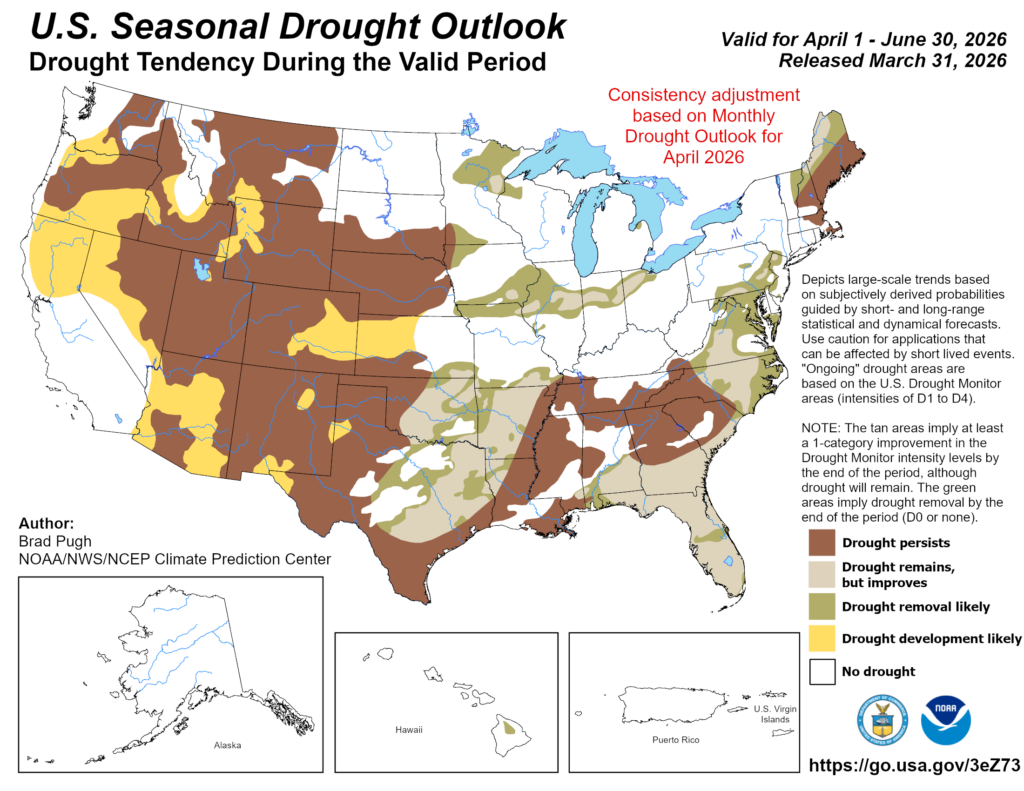
The forecast for New Hampshire and other parts of the Northeast calls for continued dry conditions through June, according to the National Weather Service’s drought outlook. For communities and homeowners reliant on well water, this trend underscores the need for regional water conservation measures to support groundwater recharge.
“For municipalities, diversification of water sources is really important,” said Diers. “Conservation has become even more important than it ever has in the past.”
During periods of drought towns and public water systems can impose outdoor water use restrictions, which would include irrigation and car washing, for example. In 2025, more than 95 outdoor water restrictions were implemented in New Hampshire.
States and municipalities can fix or replace aging infrastructure, such as leaky pipes and water mains, to conserve drinking water. Another action item is to promote green infrastructure practices that capture rainwater where it falls, allowing it to be absorbed and replenish groundwater supplies. Rain gardens, infiltration basins, planter boxes, and permeable pavement are examples of green infrastructure that also help with stormwater runoff and flooding. Many of these practices can be modified to work in a residential setting.
Additionally, individuals can assess where and how much water is used in their house, and ways to use it more efficiently. From spacing out usage, to installing water-efficient fixtures and appliances and taking shorter showers, there are many small changes that help conserve this finite resource.
“I think the biggest challenge is that it [drought] is a slow-moving disaster,” added Diers. “If there’s a flood or a fire, there’s a disaster I have to deal with. But drought is different because it takes a very long time to get into it, most of the time, and it takes a really long time to get out of it, most of the time.”
Make Every Drop Count:
Homeowner Tips to Reduce Stress on the Water Supply
- Spread out timing of water use so the well has time to replenish between uses.
- Fix leaks, especially running toilets.
- Install water-saving devices, such as shower heads and washing machines.
- Conserve water: From taking shorter showers, to turning off the faucet while brushing your teeth and doing dishes, these small changes add up.
- Do not use water for outdoor purposes, such as lawn watering, car washing and pressure washing.
- Harvest rainwater through rain barrels for irrigation purposes.
For more water conservation tips for before and during a drought, visit https://www.ready.gov/drought.
State Drought Information
Additional Resources
- National Oceanic and Atmospheric Administration National Integrated Drought Information System
- National Weather Service Climate Prediction Center: Drought Information
- Northeast Regional Climate Center Northeast Drought Early Warning System Dashboard
- U.S. Drought Monitor
- WaterSense Products