
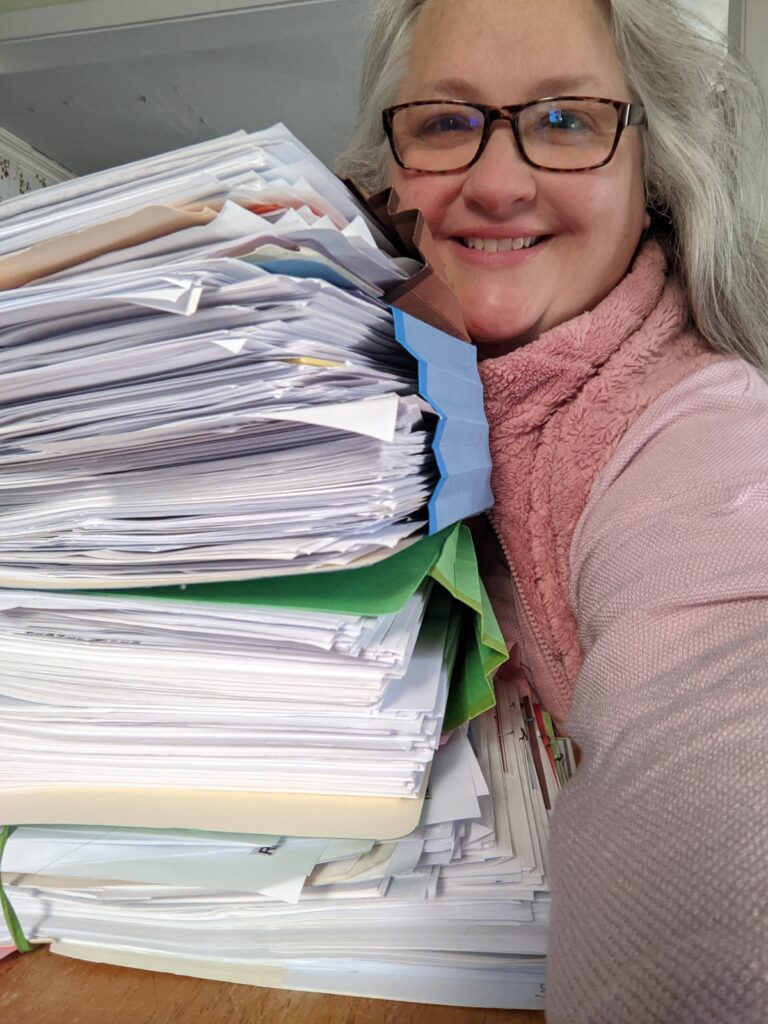
“Wastewater operators are like modern-day alchemists,” said Information Officer Shelly Jenkins. “They make sewage into clean water. It is magical!”
From wastewater certification renewals to septic system operator trainings, Jenkins has been a dedicated figure on NEIWPCC’s wastewater training team for more than 20 years. She has become a passionate advocate for the importance of wastewater treatment over the course of her career. Despite her enthusiasm for the process, Jenkins noted that she, like most people, did not know anything about the industry prior to working at NEIWPCC.
Jenkins previously held a series of administrative positions in higher education, the legal field, and finally in private industry, including serving as a personal secretary to the owner of a multi-million-dollar company. While she played a key role in supporting daily operations during a period of organizational change, the position ended following a corporate acquisition. That transition prompted Jenkins to reassess her career path and ultimately led her to pursue work in the environmental nonprofit section, where mission and public service — rather than profit — are the driving force.
“I had always worked for powerful executives and needed a break,” said Jenkins. “So, I decided to try the exact opposite.”
When she joined NEIWPCC in 2003, Jenkins said it gave her satisfaction to know that her work would contribute to improving water quality, as she grew up witnessing the need for the regulations of the Clean Water Act firsthand. As a child, she would go sailing with her family in the Lynn Harbor and vividly remembers the water being “brown, smelly, and looking as if it had rainbows on it” as they sailed over the waves.
This was not uncommon at the time, as industrial wastewater from factories poured into rivers and lakes across the region, and many municipalities lacked the proper facilities to treat raw sewage. But after working at a water quality organization, Jenkins realized that the poor water quality she was exposed to as a child may have played a tragic role in her family years earlier.
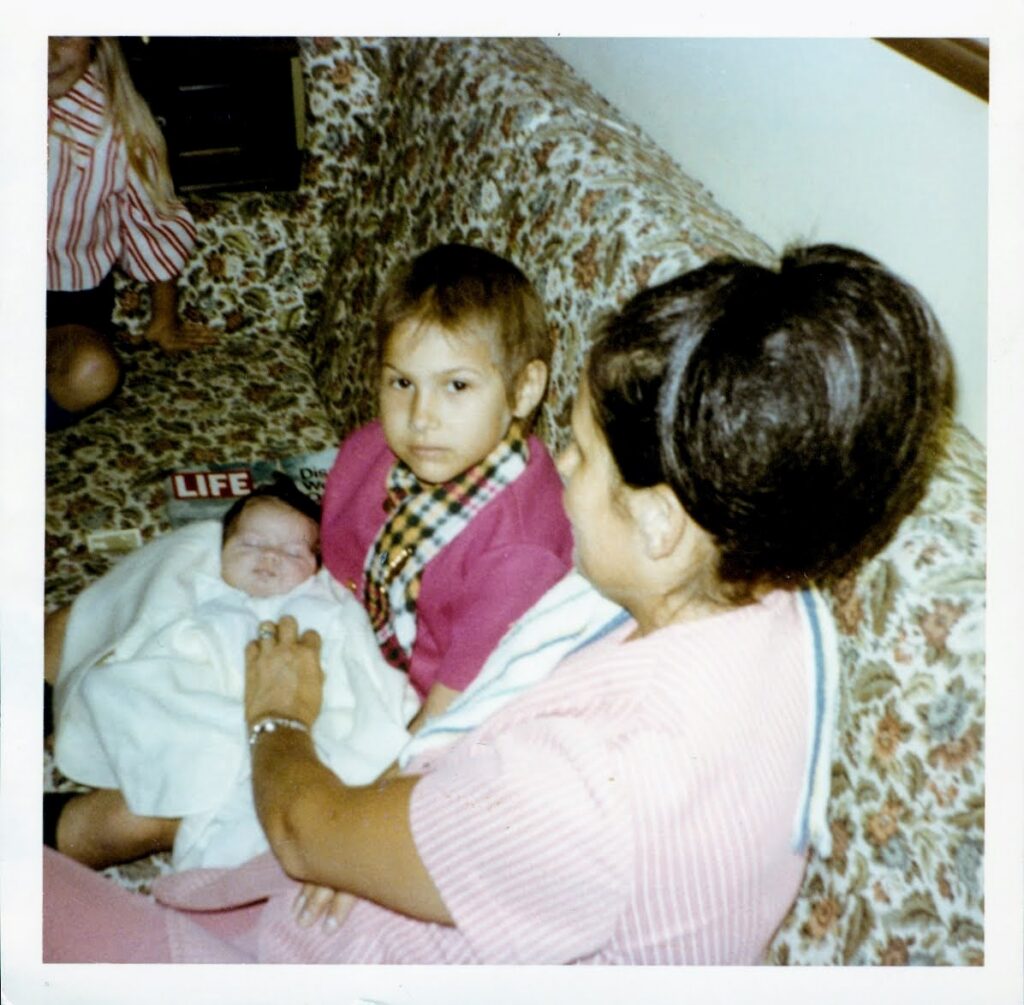
In 1970, Jenkins’s older sister Laurie was diagnosed with childhood leukemia and passed away around two years later at the age of 7. Though childhood leukemia is classified as rare by the American Cancer Society, her sister’s illness was one of a cluster of cancer cases around Wakefield, Massachusetts. Nearby, several cases were linked directly to well sites in Woburn, Massachusetts, which had been contaminated with toxic solvents from nearby industries.
In 1979, several of the families whose children had suffered from the contamination filed a landmark lawsuit, which became popularized by the 1995 book and 1998 film, “A Civil Action.” The lawsuit became a major catalyst in enacting the Superfund Act, which is a federal program through the Environmental Protection Agency that is responsible for cleaning up some of the nation’s most contaminated lands.
Though Jenkins and her family never formally identified a correlation between her sister’s illness and contaminated drinking water supplies, she now suspects that there may have been a relation.
“I had not considered this idea until I got into this industry and learned its history. That is when I began to make that connection,” said Jenkins. She also witnessed the impacts of an environmental disaster in 2003, just before starting at NEIWPCC, when 98,000 gallons of fuel oil was released into Buzzards Bay after a barge struck a rock. The incident resulted in oil spills on 90 miles of shoreline, including the beachfront property that her family owned. Jenkins said that these personal ties fuel her passion for ensuring contaminants stay out of the environment.
She began her career at NEIWPCC as an administrative assistant in the Business Operations Division to work on the wastewater certification program. As a new employee, one of her first tasks was to convert NEIWPCC’s databases from their rudimentary filing programs into Access, a database management system through Microsoft that would allow for easier searching and updating. She also coordinated NEIWPCC’s first certification exam in May 2004, with more than 500 people attending from across Massachusetts.
She quickly became an instrumental figure at NEIWPCC, helping staff who worked on a variety of projects prepare for events, meet deadlines, and navigate new technologies. She said she loved her job because it allowed her to learn about every aspect of NEIWPCC’s work.
“If you ever have a question, ask an admin,” she said. “They have all the information. That is their superpower!”
Jenkins soon developed a keen interest in the wastewater certification process. She learned about the training process and how requirements for certification varied across state lines through her colleagues.
“Once I started, the whole world of wastewater opened and this became a career, and not just a job,” said Jenkins.
As she grew increasingly familiar with the skills needed to complete renewals, coordinate training certifications, and process status changes, Jenkins was promoted to her current role in the Wastewater and Onsite Programs Division.
In this position, she took on the responsibility of coordinating the Massachusetts Wastewater Certification and Renewal Program. The program ensures that wastewater operators are properly trained on the latest standards and procedures by requiring a minimum of 20 training contact hours during a renewal year, which occurs every two years. Jenkins processes renewals, manages status changes, distributes credentials for reciprocity, and processes Combined Grade 7 upgrade applications on behalf of the Massachusetts Department of Environmental Protection (MassDEP). Last year, she issued 492 new licenses and renewed certification for an additional 387 operators. In total, the state had more than 3,400 active wastewater operators in 2025.
“Massachusetts is exceptional,” said Jenkins. “We have more wastewater operators per square mile than any other state.”
Jenkins also organizes events for wastewater operators. One of her favorites was a conference workshop, “Women in Wastewater,” which took place in March 2025 with 40 people in attendance. The program was designed to inspire women who were new to the field to take on leadership roles. Jenkins recruited several speakers, including NEIWPCC’s Rhode Island commissioner, Janine Burke-Wells, who is the Executive Director of the Northeast Biosolids and Residuals Association. The speakers described their careers in the industry and answered questions about difficulties they have faced and their greatest achievements.
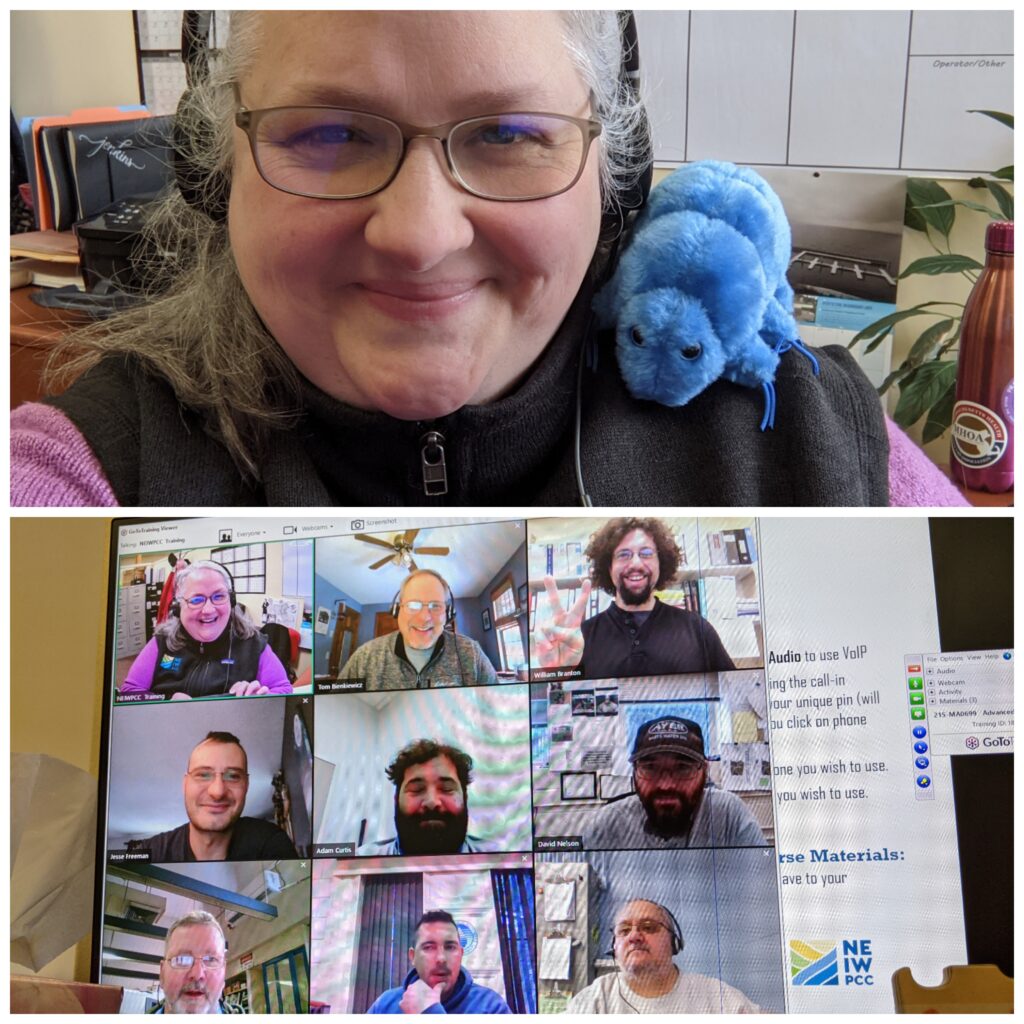
Jenkins also organized the Northeast Onsite Wastewater Short Course for several years, which served as a forum for sharing information about wastewater projects and issues that were impacting the region. During the COVID-19 pandemic in 2022, she transitioned the four-day conference to being fully remote to ensure that the experience was still useful and enjoyable for all attendees. The event was discontinued following the pandemic due to the abundance of training contact hours that became available due to virtual trainings.
She also assists MassDEP in administering the Title 5 Certification Program, which supports the professional development of septic system inspectors and soil evaluators. NEIWPCC supports this effort by coordinating certification programs and examinations for professionals responsible for system inspection and soil evaluation under Title 5.
“The operators learn how to protect public health, the environment, and water resources by making sure every septic system is properly designed, installed, and maintained,” said Jenkins.
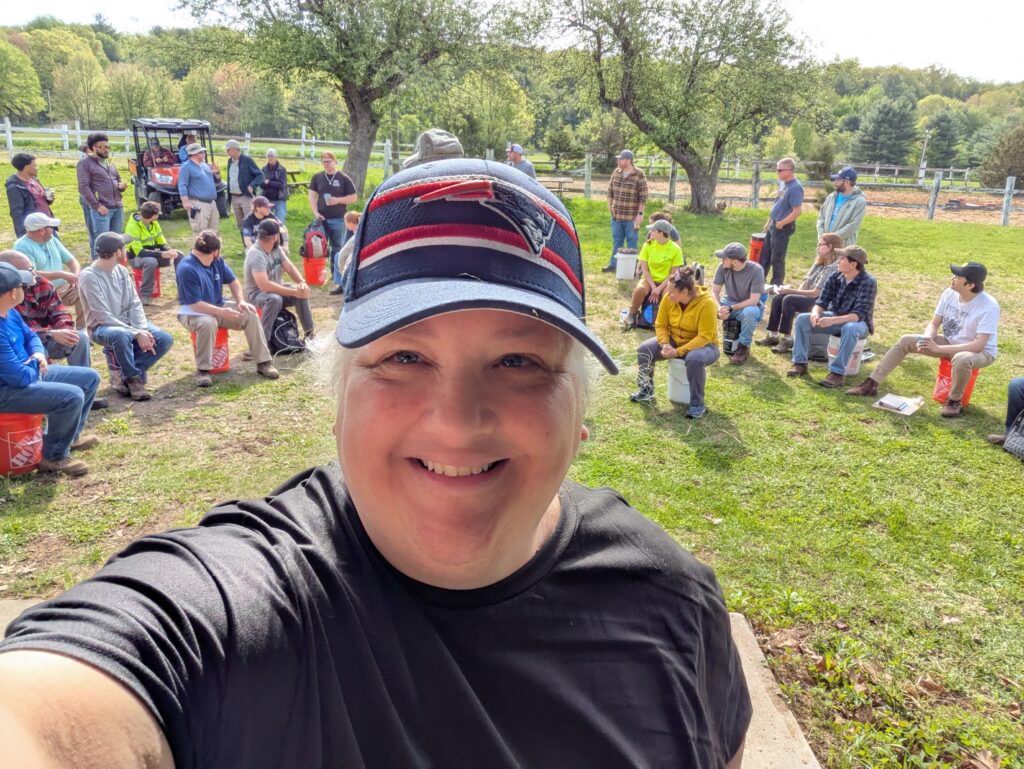
The soil evaluator training, which is offered twice a year, teaches operators to select proper systems based on the type of soil at each location through a series of field-based and classroom sessions. The system inspector program consists of two half-day virtual sessions on how to perform inspections that ensure septic systems are working correctly.
Jenkins organizes both programs and coordinates with instructors to plan the curriculums. She also serves as a contact for the students, providing them with information about the course and materials and resources.
In addition, she manages the renewal process for both soil evaluator and systems inspector professionals and maintains an online database of certified personnel on behalf of MassDEP.
Outside of work, Jenkins continues to be a driven advocate and recruiter for the wastewater industry, even recruiting her daughter’s boyfriend to the field after he was looking for a new career.
“His first question to me was, ‘Will I smell?’ she said. “And I told him, ‘From what I am told, wastewater operators say it smells like money.’”
The wastewater industry offers stable, well-paid careers to individuals both with and without college degrees. Nearly 11,000 openings are projected over the next decade as experienced workers exit the labor force to retire, according to the U.S. Bureau of Labor Statistics. According to Jenkins, all of her recruits have remained in the industry and have expressed satisfaction with their career choice.
If Jenkins learns about anyone interested in joining the wastewater industry, she puts them in contact with one of her recruits, who can attest to their experiences in the industry. From phone calls to one-on-one tours of a wastewater treatment plant, she facilitates communication between experienced wastewater professionals and potential job seekers.
She manages an active LinkedIn profile, where she has connected with hundreds of industry professionals who work on both wastewater and septic systems. Here, she provides updates on NEIWPCC’s course offerings, creates infographics with bite-sized information on how to get started in the industry, networks with industry personnel, and shares resources for homeowners about how to properly care for their septic systems.
“It is really rewarding and satisfying to work in wastewater,” said Jenkins. “The operators I work with are so hardworking and I love to help them out.”